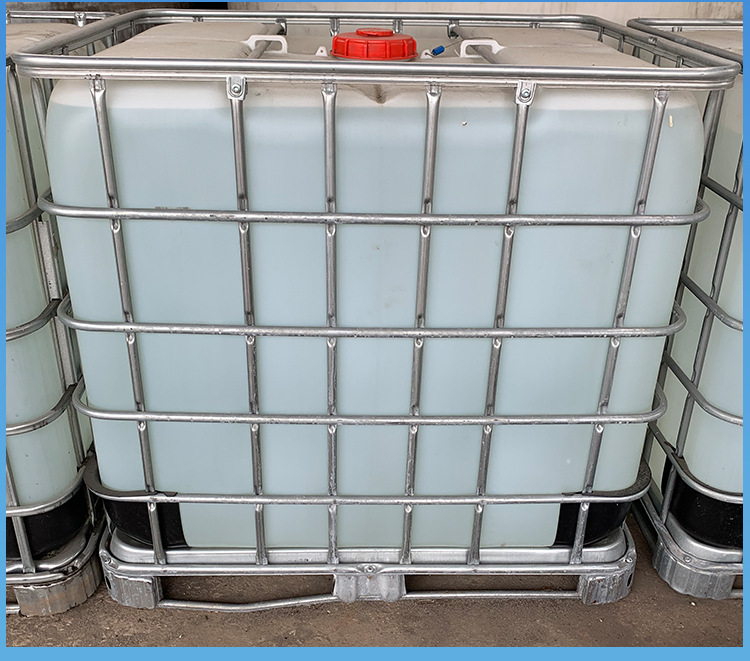
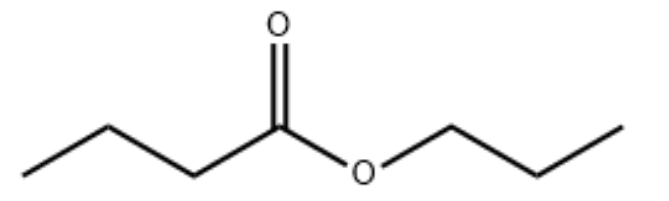
99.9% Propyl butyrate

99.9% Propyl butyrate

联系我们

  • 分类

    Organic acid ester series

  • 描述

    Propyl butyrate is an ester compound with a strong fruity aroma. It is widely used in flavors and fragrances, food additives and some solvent systems. It is a flavor component that naturally exists in many fruits.

  • Cas No.

    105-66-8

  • 纯度

    99.9%

  • 别名

物理化学参数

  • 1. Chemical Identity
    • Chemical Name: Propyl butyrate
    • IUPAC Name: Propyl butanoate
    • Synonyms: n-Propyl butyrate, Propyl n-butanoate, Butyric acid propyl ester
    • CAS Number: 105-66-8
    • EC Number: 203-320-7
    • Molecular Formula: C7​H14​O2​
    • Molecular Weight: 130.18 g/mol
  • 2. Physical Properties
    • Appearance: Clear, colorless liquid.
    • Odor: Strong, fruity odor, often described as pineapple or apricot-like.
    • Melting Point: -95 °C (-139 °F)
    • Boiling Point: 142-143 °C (288-289 °F) at 1013 hPa
    • Density: 0.875 g/cm³ at 20 °C
    • Solubility:
    • In Water: 0.52 g/L at 20 °C (Slightly soluble)
    • In Organic Solvents: Miscible with ethanol, diethyl ether, and other common organic solvents.
    • Vapor Pressure: 7.3 hPa at 20 °C
    • Vapor Density: 4.5 (Air = 1)
  • 3. Chemical Properties and Stability
    • Stability: Stable under normal conditions.
    • Incompatibilities: Incompatible with strong oxidizing agents, strong acids, and strong bases.
    • Hazardous Decomposition Products: Combustion may produce toxic fumes of carbon monoxide (CO) and carbon dioxide (CO2​).
    • Hydrolysis: Slowly hydrolyzes in water to butyric acid and propanol.
  • 4. Other Key Data
    • Flash Point: 36 °C (97 °F) - Closed cup
    • Autoignition Temperature: 425 °C (797 °F)
    • Explosive Limits:
    • Lower Explosive Limit (LEL): 1.4 % (V)
    • Upper Explosive Limit (UEL): 8.0 % (V)
    • Refractive Index (n20/D): ~1.400
 

产品应用

1. Food additives, often used to prepare fruit flavors (such as pineapple, apple, apricot, etc.), used in beverages, candies, baked goods, dairy products, etc. to enhance or give specific flavors.

2. Daily chemical and fragrance industry, as a fragrance ingredient, used in perfumes, shampoos, lotions, detergents and other products to provide a fresh fruity aroma.

3. Industrial solvents used in high-end paint solvents.

4. Tobacco industry: as a flavor additive for tobacco products.

安全信息

  • This information is a summary based on the Globally Harmonized System of Classification and Labelling of Chemicals (GHS).
    • 1. GHS Classification
      • Flammable Liquids (Category 3)
      • Skin Irritation (Category 2)
      • Eye Irritation (Category 2A)
    • 2. GHS Label Elements
      • Pictograms:
        • Flame (GHS02)
        • Exclamation Mark (GHS07)
      • Signal Word: Warning
      • Hazard Statements (H-Statements):
        • H226: Flammable liquid and vapor.
        • H315: Causes skin irritation.
        • H319: Causes serious eye irritation.
      • Precautionary Statements (P-Statements):
      • Prevention:
        • P210: Keep away from heat, hot surfaces, sparks, open flames and other ignition sources. No smoking.
        • P233: Keep container tightly closed.
        • P280: Wear protective gloves, eye protection, and face protection.
      • Response:
        • P303 + P361 + P353: IF ON SKIN (or hair): Take off immediately all contaminated clothing. Rinse skin with water or shower.
        • P305 + P351 + P338: IF IN EYES: Rinse cautiously with water for several minutes. Remove contact lenses, if present and easy to do. Continue rinsing.
        • P332 + P313: If skin irritation occurs: Get medical advice/attention.
        • P337 + P313: If eye irritation persists: Get medical advice/attention.
        • P370 + P378: In case of fire: Use dry sand, dry chemical or alcohol-resistant foam to extinguish.
      • Storage:
        • P403 + P235: Store in a well-ventilated place. Keep cool.
      • Disposal:
        • P501: Dispose of contents/container to an approved hazardous waste disposal plant.
    • 3. Summary of Primary Hazards
      • Fire Hazards: Flammable liquid and vapor. Vapors are heavier than air and can form explosive mixtures with air. Vapors may travel to a source of ignition and flash back.
      • Health Hazards: Causes skin irritation and serious eye irritation upon direct contact. Inhalation of high concentrations may cause respiratory tract irritation and central nervous system depression.
    • Environmental Hazards: While not classified as hazardous to the aquatic environment, large spills should be contained and prevented from entering waterways.

Follow Us
获取最新资讯

联系我们