Environmentally friendly solvent series

Ethylene glycol MEG (cas 107-21-1), diethylene glycol DEG (cas 111-46-6), triethylene glycol TEG (cas 112-27-6), tetraethylene glycol (cas31692-85-0), propylene glycol PG (cas 57-55-6), dipropylene glycol DPG (cas 110-98-5), tripropylene glycol TPG (cas24800-44-0), 1,4-butanediol BDO (cas 110-63-4) are all polyols.they are widely used in automotive antifreeze, polyester fiber, plasticizer, pesticide intermediates, natural gas dehydration, oil field dehydration, unsaturated resin, polyester resin, biodegradable materials, etc.

我们在Environmentally friendly solvent series产品中的优势。

● 1. Morpholine, as an important organic intermediate, is widely used in medicine, rubber additives and water treatment. Wencheng Chemical adopts a closed-loop production process to significantly reduce volatile organic compounds (VOCs) emissions, and the product purity is as high as 99.9%, meeting the high-end demand of pharmaceutical grade.


● 2. Diglycolamine (DGA), the environmental value of diglycolamine as an environmentally friendly solvent lies in its biodegradability, low toxicity and low volatility, which can significantly reduce the damage to the ozone layer and environmental pollution, replace traditional harmful organic solvents, and completely replace traditional toxic amine catalysts, providing reliable support for green manufacturing. Wencheng Chemical's diglycolamine (DGA) products rely on the advantages of the integration of the entire industry chain (from upstream raw materials such as ethylene oxide to customized downstream applications), with high purity (≥99%), low impurity stable quality (through ISO certification and strict quality inspection) as the core competitiveness, and rely on the intelligent warehousing and logistics system to achieve 48-hour rapid response delivery to ensure the efficient operation of the customer supply chain.


● 3. N-methylmorpholine-N-oxide (NMMO), as the core solvent for the production of cellulose fiber (Lyocell), the purity of NMMO directly affects the quality of regenerated fiber. Wencheng adopts molecular sieve directional purification process, and its product stability is leading in the industry, promoting the sustainable development of the textile industry.


● 4. Diglycolamine (DGA), DGA, which has both amine activity and environmental protection characteristics, is the preferred raw material for natural gas desulfurization and daily chemical thickeners. Wencheng customizes the development of low viscosity and high reaction efficiency DGA series to reduce customer process energy consumption.

产品中心

简要介绍一下我们的Environmentally friendly solvent series核心产品。
99.5% Diglycolamine
99.5% Diglycolamine
DEA

Diglycolamine, referred to as DGA, CAS No. 929-06-6, is a colorless viscous syrupy liquid with strong hygroscopicity, strong alkalinity, high boiling point and good water solubility. It has active chemical properties, has the characteristics of both alcohols and amines, and is easy to react with acids, esters, etc. Diglycolamine DGA can also be used in high cold conditions, and is particularly suitable for use in hot, water-deficient, and desert areas. Its upstream raw materials are ethylene oxide and ammonia, and its downstream applications are widely used in the fields of natural gas desulfurization and decarbonization, emulsification of personal care products, coating curing, and synthesis of pharmaceutical intermediates. It is known for its efficient absorption and stability and is a key functional compound for industrial gas purification and fine chemicals production.

Wencheng Chemical's diethylene glycol amine synthesis process is to put diethylene glycol and catalyst Ni/Al₂O₃ into the reactor, control the temperature to 200-300°C, control the high pressure (10-20 MPa), add hydrogen as a reducing agent to prevent oxidation side reactions, and add ammonia (NH₃). Under the action of the catalyst, the hydroxyl group of diethylene glycol is replaced by an amine group to generate DGA.

Diglycolamine is mainly used in natural gas and petroleum desulfurization and deacidification, daily chemical industry, chemical manufacturing, medicine and pesticides.

Storage conditions: cool and ventilated, avoid light, keep away from fire and heat sources

Purity (V/V%) ≥99.5%
Color No. ≤20APHA
Moisture ≤ 0.1%
Capacity: 600 tons/month
Delivery speed: Same day
Minimum packaging: 200kg/iron drum or tank

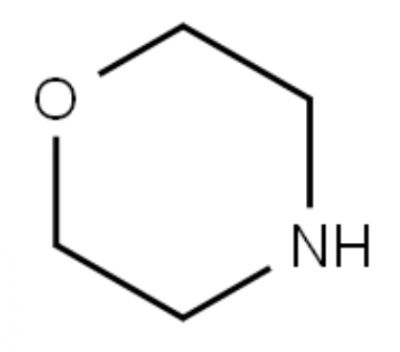
99.5% Morpholine
99.5% Morpholine

Morpholine cas 110-91-8, also known as 1,4-oxazacyclohexane, p-oxazacyclohexane, p-oxazacycline, and tetrahydro-1,4-oxazine, is a colorless and transparent liquid heterocyclic compound with an ammonia smell. The chemical formula is C₄H₉NO. The boiling point is about 128°C. It is easily soluble in water and most organic solvents. Morpholine contains a secondary amine group and has all the typical reaction characteristics of a secondary amine group. Its molecule contains a six-membered ring composed of an oxygen atom and a nitrogen atom. It is weakly alkaline and nucleophilic. It can react with acids to form salts and participate in reactions such as alkylation and acylation. It is industrially produced by catalytic synthesis of ethanolamine or diethylene glycol and ammonia.


Wencheng Chemical's morpholine synthesis process is to react diethylene glycol and ammonia in a hydrogen atmosphere at 200-300°C through a catalyst Cu-Cr oxide bed, and then condense and distill to purify.

Morpholine is widely used in pharmaceuticals (such as antibiotic synthesis), pesticides, rubber vulcanization accelerators, metal corrosion inhibitors (such as boiler water treatment) and surfactants.

Storage conditions: cool and ventilated, avoid light, keep away from fire and heat sources

Purity (V/V%) ≥99.5%
Color No. ≤20APHA
Moisture ≤ 0.1%
Capacity: 600 tons/month
Delivery speed: Same day
Minimum packaging: 225kg/iron drum or tank

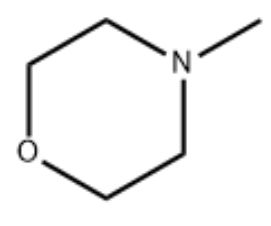
99.5% N-Methylmorpholine
NMM

N-methylmorpholine, referred to as NMM, CAS109-02-4, also known as 4-methylmorpholine and N-ethyltetrahydropyrrolemethylamine, is a colorless to light yellow liquid and a heterocyclic tertiary amine with a pungent ammonia odor. The boiling point is about 115°C. It is soluble in water and a variety of organic solvents, and has both polarity and hydrophobicity. It is flammable, corrosive, and slightly toxic. Inhalation of vapor is irritating to skin and mucous membranes. It is an excellent solvent, emulsifier, corrosion inhibitor, and polyurethane foam catalyst. Its chemical properties are weakly alkaline. The lone pair of electrons on the nitrogen atom makes it commonly used as a catalyst or alkaline medium in organic synthesis, especially in polyurethane foaming as an efficient catalyst to adjust the reaction speed. The compound is usually prepared by reacting morpholine with a methylating agent (such as methyl iodide). Attention should be paid to its flammability and irritation to the skin and mucous membranes, and safety regulations should be followed during storage and use.

Wencheng Chemical's N-methylmorpholine synthesis process is to dissolve morpholine in a solvent at 0-5°C, add sodium hydroxide as a base, slowly add iodomethane, keep stirring at low temperature for 4-6 hours, neutralize with dilute hydrochloric acid after the reaction, extract the organic phase (such as dichloromethane), dry and purify by distillation (boiling point is about 115-117°C). The equivalent of iodomethane needs to be strictly controlled to avoid the formation of quaternary ammonium salt byproducts, and pay attention to the toxicity of halogenated hydrocarbons and operational safety.

N-methylmorpholine is widely used in polymer materials, pharmaceuticals (such as synthesis of drug intermediates) and pesticides, and is also used in fine chemicals as a solvent or phase transfer catalyst.

Storage conditions: cool and ventilated, avoid light, keep away from fire and heat sources

Purity (V/V%) ≥99.7%
Color No. ≤20APHA
Moisture ≤ 0.1%
Capacity: 600 tons/month
Delivery speed: Same day
Minimum packaging: 180kg/iron drum or tank

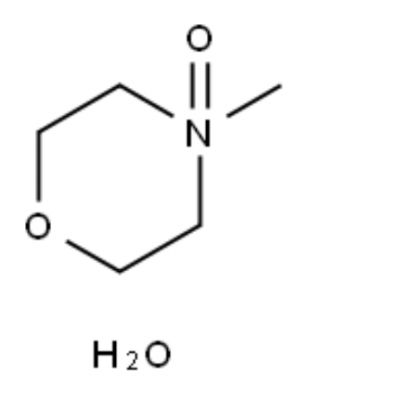
99.5% N-Methylmorpholine-N-oxide
NMMO

N-Methylmorpholine-N-oxide is abbreviated as NMMO, cas 80913-66-2, also known as 4-methylmorpholine-N-oxyl. It is a highly polar organic compound. It is a colorless crystalline solid at room temperature (usually exists in the form of a monohydrate). It is hygroscopic and miscible with water, with a melting point of about 70-80°C. As an efficient green solvent, its core use is to dissolve cellulose to produce Lyocell fiber (Tencel), replacing traditional high-pollution processes. The solvent recovery rate in the closed-loop system is more than 99%, which significantly reduces the environmental burden. In terms of chemical properties, NMMO is both oxidizing and easy to decompose at high temperatures. Stabilizers (such as propylene glycol) need to be added to ensure storage safety. It is produced upstream by oxidation of N-methylmorpholine. With its high efficiency and recyclability, this compound has become a key medium for sustainable chemical industry.

Wencheng Chemical's N-methylmorpholine-N-oxide synthesis process is to dissolve N-methylmorpholine in water or ethanol, add a catalyst (5% sodium tungstate), slowly add 30% H₂O₂ (molar ratio 1:1.2), heat to 50-60°C and stir to react for 12-24 hours. After the reaction is completed, quench the excess H₂O₂ with sodium sulfite, concentrate under reduced pressure, and recrystallize (ethanol/ether) to obtain white crystals.

N-Methylmorpholine-N-oxide is widely used in the fields of regenerated cellulose films, medical materials, etc. In addition, it is used as a mild oxidant in organic synthesis for the selective oxidation of alcohols, highlighting its versatility.

Storage conditions: cool and ventilated, avoid light, keep away from fire and heat sources

Purity (V/V%) ≥50%
Color No. ≤20APHA
Moisture ≤ 0.1%
Capacity: 600 tons/month
Delivery speed: Same day
Minimum packaging: 25 kg/bag

常见问题解答

您可能还想了解以下内容。

1.What is the principle of morpholine as a metal corrosion inhibitor and what are its advantages?


The reason why morpholine can be used as a metal corrosion inhibitor is that 1. the nitrogen and oxygen atoms in the morpholine molecule have lone pairs of electrons, which can form coordination bonds with the empty d orbitals of the metal surface (such as iron and copper), thereby adsorbing on the metal surface to form a dense monomolecular protective film. This film can effectively block contact with corrosive media such as water, oxygen, Cl⁻, and slow down electrochemical corrosion reactions (such as anodic oxidation and cathodic reduction). 2. Morpholine is weakly alkaline in water (pKa≈8.4), which can neutralize acidic corrosive environments and inhibit hydrogen ions (H⁺). It can corrode metals, especially in boilers or circulating water systems, by maintaining neutral or weakly alkaline conditions and slowing down the dissolution of metals. 3. Morpholine has a certain volatility and can form a gas-phase protective layer in closed systems (such as steam pipes) to inhibit the corrosion of metals by condensed water.
Morpholine is an environmentally friendly corrosion inhibitor, especially suitable for long-term protection of equipment in petrochemical, power, shipbuilding and other industries. The trend of environmentally friendly corrosion inhibitors replacing traditional products is obvious, and the market potential is great.


2.What role does N-methylmorpholine play in the production of polyurethane (PU) foam and what is the principle?


N-Methylmorpholine (NMM) mainly acts as a tertiary amine catalyst in the production of polyurethane (PU) foam. Its core function is to regulate the balance between foaming reaction and gelling reaction, thereby affecting the structure and performance of the foam. Specifically, there are about three functions: 1. Catalyze the foaming reaction, promote the reaction of isocyanate (such as MDI or TDI) with water, and generate carbon dioxide (CO₂) and polyurea structure. CO₂ acts as a foaming gas to form the porous structure of the foam. 2. Catalyze the gelling reaction, accelerate the polycondensation reaction of isocyanate and polyol, form the urethane main chain of polyurethane, and enhance the mechanical strength and network structure of the foam. 3. Balance the reaction rate, and control the pore structure (open or closed), density and elasticity of the foam by regulating the rates of foaming (gas generation) and gelling (network curing).
The principle is: 1. Alkaline catalytic mechanism, the nitrogen atom of N-methylmorpholine carries a lone pair of electrons, which acts as a proton acceptor and combines with the acidic hydrogen of isocyanate (such as the NCO group) to form a transition state intermediate, reducing the activation energy of the reaction, thereby accelerating the reaction. 2. Foaming reaction (water and isocyanate): NMM preferentially catalyzes the reaction to generate CO₂, promoting bubble nucleation and expansion, gel reaction (polyol and isocyanate): It also catalyzes the formation of carbamate to ensure that the foam quickly solidifies and sets after expansion. 3. NMM has moderate volatility and can escape the system in the later stage of the reaction, reducing the impact of residues on foam properties.


3.Why can N-methylmorpholine-N-oxide be used as the preferred solvent in the production of Lyocell fiber? What are the reasons?


N-methylmorpholine-N-oxide (NMMO) is the preferred solvent in Lyocell fiber production mainly based on the following key reasons:
1. Efficient cellulose dissolving ability, breaking the hydrogen bond network: There are a large number of hydrogen bonds between cellulose molecules, which makes it difficult to dissolve in ordinary solvents. The strong polarity of NMMO and the oxygen atoms in the molecule can combine with cellulose hydroxyl groups through hydrogen bonds, effectively destroying the crystalline structure of cellulose and dissolving it. At high temperatures (about 80-120°C), NMMO can form a stable cellulose solution (concentration can reach 10-15%), meeting the requirements of the spinning process.
2. Environmental friendliness, NMMO is non-toxic or low-toxic. Compared with the traditional viscose method (using toxic substances such as CS₂), it greatly reduces environmental pollution. The recovery rate of NMMO is as high as more than 99%, and the production wastewater is very small, which meets the requirements of sustainable manufacturing.
3. Process compatibility, mild processing conditions: NMMO-cellulose solution can be directly dry-sprayed and wet-spun in a molten state without complex chemical derivatization (such as the yellowing reaction of the viscose method), the process is shorter, and the solution is stable: NMMO is not easy to decompose at high temperatures, the solution viscosity is moderate, which is conducive to spinning and forming, and the fiber structure is uniform.
3. Economic feasibility, controllable solvent cost: Although the unit price of NMMO is high, its high recovery rate reduces the long-term production cost, and the equipment is less corrosive: Compared with some ionic liquids, NMMO is less corrosive to equipment and extends the life of the equipment.
4. Optimized fiber performance, the NMMO dissolution process has little damage to the degree of polymerization of cellulose, and the resulting Lyocell fiber has high strength and good hygroscopicity, and its performance is close to that of natural cotton fiber, which is better than traditional regenerated cellulose fiber.


4.What is the relationship between morpholine, N-methylmorpholine, and N-methylmorpholine-N-oxide, and what are the differences in their uses?


Morpholine, N-methylmorpholine and N-methylmorpholine-N-oxide are three closely related organic compounds, which are gradually derived in structure and have different uses.
Morpholine (Morpholine), a six-membered heterocyclic compound, contains one oxygen atom and one nitrogen atom, and has a structural formula of C₄H₉NO. The nitrogen atom is unsubstituted (NH group), N-methylmorpholine (N-Methylmorpholine, NMM), a methyl substituent (N-CH₃) is introduced on the nitrogen atom of morpholine, with a structural formula of C₅H₁₁NO, and its alkalinity is slightly enhanced compared with morpholine, N-methylmorpholine-N-oxide (N-Methylmorpholine-N-oxide, NMO), the nitrogen atom of N-methylmorpholine is further oxidized to N-oxide (N⁺-O⁻ group), with a structural formula of C₅H₁₁NO₂, and its polarity is significantly improved.
Morpholine is more suitable for 1. As an industrial corrosion inhibitor for boiler water treatment systems and circulating water systems of steam power plants. 2. As a polymer synthesis catalyst for polyamide resin (nylon) polycondensation reaction and polyurethane foaming. 3. As a rubber vulcanization accelerator.
N-methylmorpholine is more suitable for 1. As a non-nucleophilic alkaline solvent. 2. Polar aprotic solvents for the polymerization of polyurethane (PU) or polyimide (PI). 3. Industrial cleaning agents (such as metal degreasing agents), emulsion polymerization aids.
N-methylmorpholine-N-oxide is more suitable for 1. Oxidation reaction co-oxidant. 2. Lyocell fiber (environmentally friendly artificial fiber) production. 3. Oxidation of specific functional groups in drug synthesis (such as alcohol → ketone, thioether → sulfoxide).


5.What is the principle of using diglycolamine for acid gas treatment and what are its advantages?


Principle: The amino group (-NH₂) in the DGA molecule reacts with acidic gases to generate reversible salts (such as carbamate or hydrogen sulfide), absorbs acidic gases at low temperature/high pressure, and then releases the gas by heating (regeneration), and DGA regains activity and is recycled.
Advantages:
1. High absorption capacity: DGA has a significantly higher absorption capacity for acidic gases than traditional amines (such as MEA and DEA), especially under high acidic gas partial pressure, which can reduce the amount of solvent circulation, equipment size and energy consumption.
2. Low regeneration energy consumption: Due to the low binding energy between DGA and acidic gases, the regeneration temperature (about 110–120°C) is lower than that of MEA (about 120–140°C), which saves steam consumption and reduces operating costs.
3. Anti-degradation and low corrosion: DGA is not easily oxidized or thermally degraded, which prolongs the life of the solvent, reduces the generation of byproducts (such as thermally stable salts), is less corrosive to equipment than MEA, and can reduce the amount of corrosion inhibitors and maintenance costs.
4. Strong adaptability, maintaining good fluidity at low temperatures (such as cold environments), suitable for harsh working conditions, has a certain ability to remove organic sulfur (such as mercaptans, COS), and is suitable for natural gas or refinery gas containing a variety of impurities.
5. Environmental protection and economy, low solvent loss, low volatility (low vapor pressure), reduced environmental pollution, low comprehensive energy consumption, and long-term operating costs are better than traditional amine methods.


Follow Us
获取最新资讯

联系我们