Organic acid ester series

Flavors and fragrances exist in nature in the form of various chemicals, and organic acid esters are one of them. They exist naturally in various fruits and other plants, but due to their low yield and low purity, humans cannot use them in large quantities.

我们在Organic acid ester series产品中的优势。

Wencheng Chemical has mature production equipment, excellent distillation production technology, and a database of various mature organic acid ester production processes, which enables us to mass-produce flavors and fragrances with advanced technology.


We synthesize various organic acid esters by arranging and combining organic acids and organic alcohols.We synthesized various organic acid esters by permutation and combination of organic acids and organic alcohols, such as butyric acid (cas107-92-6), isobutyric acid (cas79-31-2), n-propyl propionate (cas 106-36-5), n-butyl propionate (cas 590-01-2), ethyl butyrate (cas105-54-4), n-propyl butyrate (cas105-66-8), isopropyl butyrate (cas638-11-9), and n-butyl butyrate (cas109-21-7).They all have their own flavors such as apple flavor, banana flavor, orange flavor, pineapple flavor, cherry flavor, raspberry flavor, grape flavor, etc. They are widely used in edible flavors and fragrances, daily chemical flavors, beverages, wine, beer, bread, baked goods, etc.

产品中心

简要介绍一下我们的Organic acid ester series核心产品。
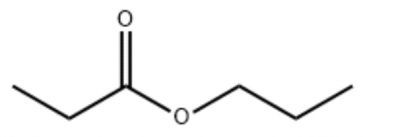
99.9% Propyl propionate

Propyl propionate CAS No. 106-36-5 Colorless transparent liquid, with a strong spicy fruity flavor at high concentrations, boiling point 122°C, insoluble in water but soluble in organic solvents such as ethanol and ether; chemically hydrolyzed into propionic acid and propanol, flammable and stable. Its upstream is synthesized by esterification of propionic acid and propanol, and its downstream is mainly used as an environmentally friendly solvent for coatings and inks, as well as a fruity flavor additive for food and daily chemical flavors, with both industrial practicality and low toxicity.

Wencheng Chemical's n-propyl propionate synthesis process is to mix n-propanol and propionic acid in a molar ratio of 1:1.1, add catalyst sulfuric acid or p-toluenesulfonic acid (the amount added is 1%-3% of the total reaction mass), heat the esterification reaction at 110-120°C and start reflux at the same time, use cyclohexane to bring water and a water separator to remove the reacted water. After the reaction is carried out for 4-6 hours, neutralize with liquid alkali, and after alkali washing and water washing, it is obtained by distillation under normal pressure.

Propyl propionate is mainly used in flavors and fragrances, as a solvent for coatings and inks, and in the production of plastics, etc.

Storage conditions: cool and ventilated, avoid light, keep away from fire and heat sources

Purity (V/V%) ≥99.8%
Color No. ≤20APHA
Moisture ≤ 0.1%
Capacity: 1000 tons/month
Delivery speed: Same day
Minimum packaging: 170 kg/iron drum or tank

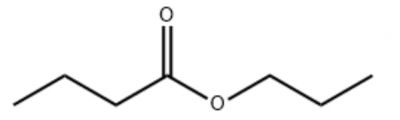
99.9% Propyl butyrate

Propyl butyrate, CAS No. 105-66-8, is a colorless transparent liquid with pineapple aroma, boiling point of about 142°C, density lower than water and insoluble in water; chemical properties are stable, can be hydrolyzed into butyric acid and propanol through catalytic reaction, and is usually prepared through acid-catalyzed esterification reaction. The upstream raw materials are butyric acid and n-propanol, and the downstream is widely used in food flavors (to give fruity aroma), daily chemical fragrances and industrial solvents, with low toxicity and high volatility.

Wencheng Chemical's n-propyl butyrate synthesis process is to mix butyric acid and anhydrous ethanol in proportion, use 1%-2% of the total reaction mass of solid acid as a catalyst, heat to 80-90℃ for reflux, add water-carrying agent cyclohexane and use a water separator to remove the water produced by the reaction, wash with alkali and dry with saturated sodium carbonate solution, then purify and distill at normal pressure to collect the 120-125℃ fraction.

Propyl butyrate is mainly used in the preparation of flavors and fragrances, food additives, cellulose, and solvents.

Storage conditions: cool and ventilated, avoid light, keep away from fire and heat sources

Purity (V/V%) ≥99.8%
Color No. ≤20APHA
Moisture ≤ 0.1%
Capacity: 1000 tons/month
Delivery speed: Same day
Minimum packaging: 170 kg/iron drum or tank

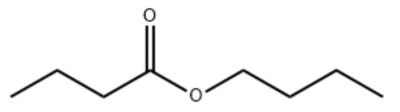
99.9% Butyl butyrate

Butyrate, CAS No. 109-21-7, is a colorless transparent liquid with apple aroma, boiling point of about 166°C, density lower than water and insoluble in water. It is made by esterification of butyric acid and butanol. It has stable chemical properties, but can be hydrolyzed into corresponding acids and alcohols under acid/base catalysis. Its upstream relies on petrochemical or bio-based butyric acid and butanol, and its downstream is widely used in food flavors (simulating apple and banana flavors), industrial solvents (paints, inks) and daily chemical fragrances. It has both flavor enhancement effect and solubility performance, and is one of the potential choices for environmentally friendly solvents.

Wencheng Chemical's n-propyl butyrate synthesis process is that the molar ratio of butyric acid to butanol is usually 1:1.2~1.5, 1%-3% of the total mass of the reaction raw materials is added with concentrated sulfuric acid, heated to reflux temperature (about 115~120℃), the reaction time is 4~6 hours, the water produced by the reaction is removed with a water separator, and then liquid alkali is neutralized and dried and distilled to obtain.

Butyl butyrate is widely used in edible flavors such as pineapple, banana, apple, raw pear, berry, nut, peach, whiskey, etc., in flavors for cosmetics, solvents for chemical production, etc.

Storage conditions: cool and ventilated, avoid light, keep away from fire and heat sources

Purity (V/V%) ≥99.8%
Color No. ≤20APHA
Moisture ≤ 0.1%
Capacity: 1000 tons/month
Delivery speed: Same day
Minimum packaging: 170 kg/iron drum or tank

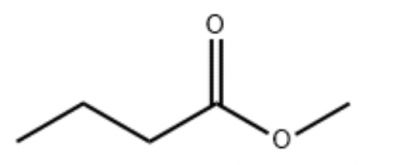
99.9% Methyl butyrate

Methyl butyrate, CAS No. 623-42-7, is a colorless transparent liquid with apple aroma, boiling point of about 102°C, slightly soluble in water but easily soluble in organic solvents. Chemically, it is easily hydrolyzed to produce butyric acid and methanol, which are commonly used in food flavors (such as apple and pineapple flavors) and industrial solvents, and can also be used as an organic synthesis intermediate. Its upstream raw materials are butyric acid and methanol, and its downstream is widely used in the spices, coatings and pharmaceutical industries. It is characterized by moderate volatility, low toxicity and low cost.

Wencheng Chemical's methyl butyrate synthesis process is that the molar ratio of butyric acid to methanol is usually 1:1.2~1.5, using sulfonic acid resin as a catalyst, controlling the temperature at 60-70°C, directly esterifying for 4-8 hours, dehydrating with a water-carrying agent, neutralizing with liquid alkali, drying, and then distilling at atmospheric pressure to obtain the product.

Methyl butyrate is mainly used in flavors and fragrances, as a solvent for organic synthesis, etc.

Storage conditions: cool and ventilated, avoid light, keep away from fire and heat sources

Purity (V/V%) ≥99.8%
Color No. ≤20APHA
Moisture ≤ 0.1%
Capacity: 1000 tons/month
Delivery speed: Same day
Minimum packaging: 170 kg/iron drum or tank

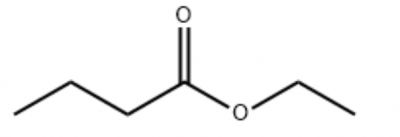
99.9% Ethyl butyrate

Ethyl butyrate, CAS No. 105-54-4, is a colorless and transparent liquid with the aroma of pineapple and banana. The boiling point is about 121°C. It is slightly soluble in water and easily soluble in organic solvents. It is chemically stable but hydrolyzable. It is synthesized by the esterification of butyric acid and ethanol. It is mainly used in food flavors, cosmetic additives and industrial solvents. It is used downstream in beverages, baking, pharmaceuticals and other fields, and upstream is related to fatty acids and alcohol raw materials.

Wencheng Chemical's ethyl butyrate synthesis process is to mix butyric acid and anhydrous ethanol in proportion, use 1%-2% of the total reaction mass of solid acid as a catalyst, heat to 80-90°C for reflux, add water-carrying agent cyclohexane and use a water separator to remove the water produced by the reaction, wash with alkali and dry with saturated sodium carbonate solution, and then purify and distill at normal pressure to collect the 120-125°C fraction.

Widely used in various foods, beverages, alcoholic beverages and tobacco flavors

Storage conditions: cool and ventilated, avoid light, keep away from fire and heat sources

Purity (V/V%) ≥99.8%
Color No. ≤20APHA
Moisture ≤ 0.1%
Capacity: 1000 tons/month
Delivery speed: Same day
Minimum packaging: 170 kg/iron drum or tank

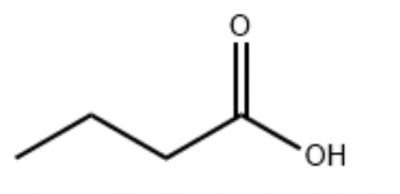
99.9% Butyric acid
99.9% Butyric acid

n-Butyric acid, CAS No. 107-92-6, is a colorless, transparent, oily liquid with a yogurt flavor. It is a common edible flavoring, also known as ethylacetic acid and propylformic acid. It has a boiling point of about 163.5°C and is slightly soluble in water. It is both a natural fermentation product (such as the source of cheese smell) and an important chemical intermediate. Using n-butyric acid as a starting agent, many important flavors and fragrances can be derived, such as methyl butyrate, ethyl butyrate, propyl butyrate, butyl butyrate, etc.Butyric acid exists naturally in lemongrass, nutmeg, butter, etc. The industrial production methods include fermentation and butanol (or butyraldehyde) oxidation.

Wencheng Chemical's n-butyric acid synthesis process is the n-butyraldehyde oxidation method. The temperature is controlled at 80-120°C under normal pressure. n-Butyraldehyde is oxidized by passing oxygen in the presence of a Mn salt catalyst. This method has high selectivity, few by-products, is environmentally friendly and has high purity of the finished product.

Butyric acid is mainly used in food and spice additives, pharmaceutical flavoring agents, pharmaceutical intermediates, cellulose butyrate, preservatives, etc.

Storage conditions: cool and ventilated, avoid light, keep away from fire and heat sources

Purity (V/V%) ≥99.7%
Color No. ≤20APHA
Moisture ≤ 0.1%
Capacity: 1000 tons/month
Delivery speed: Same day
Minimum packaging: 180 kg/iron drum or tank

常见问题解答

您可能还想了解以下内容。

1.What are the special aroma and uses of n-propyl propionate and n-ethyl butyrate?


Our ester products are volatile compounds synthesized through esterification reactions, with low aroma threshold and high purity. For example, ethyl butyrate has a distinct pineapple aroma, while propyl propionate has a pineapple aroma. The short-chain fatty acids and alcohol groups in this type of molecular structure give it rapid volatility, which can efficiently bind to olfactory receptors and play a "top note" role in fragrance formulas.


2. What fields are butylate mainly used in?


The products are widely used in food flavoring (such as baking flavors), beverage flavor enhancers (such as juice drinks), daily chemical flavors (fragrance for cleaning products) and industrial solvents. Take n-butyl butyrate as an example. Its cider aroma is often used in the preparation of candy and dairy flavor bases, and it is also used as an environmentally friendly solvent in the ink industry.


3.What is the difference between synthetic esters and natural esters? Are synthetic esters safe? Are they dangerous?


The chemical composition of synthetic esters and natural esters is the same. Natural esters also require the addition of chemicals and produce new impurities during chemical refining. In essence, the two are the same, and synthetic esters have fewer impurities and higher purity, so it is safe to use synthetic esters that meet quality standards.


4. What are the advantages of synthetic esters over natural fruit extracts?


Through GC-MS comparative analysis, the main aroma components of synthetic esters (such as the natural existence of methyl butyrate in strawberries) are more than 98% consistent with natural extracts. Compared with natural products, our products have the following characteristics: 1. High batch stability, no seasonal fluctuations; 2. No pesticide residues and microbial risks; 3. Directed modification of molecular structure (such as adjusting carbon chain length) to achieve customized aroma intensity.


5.What are Wencheng Chemical's core advantages in ester production?


Our competitiveness lies in:

1. Using continuous flow reactor technology, the esterification rate is increased to 99.2%, and the residual free acid content is ≤0.05%;

2. Equipped with an online infrared monitoring system to achieve precise fraction cutting in the molecular distillation stage;

3. Passing ISO 9001 and FSSC 22000 dual certification, and building a closed-loop wastewater pretreatment system (COD removal rate ≥90%);

4. Supporting customers to jointly develop functional derivatives (such as high-temperature resistant microencapsulated esters).


Follow Us
获取最新资讯

联系我们