
99% Isobornyl Methacrylate
Contact Us
Acrylate series
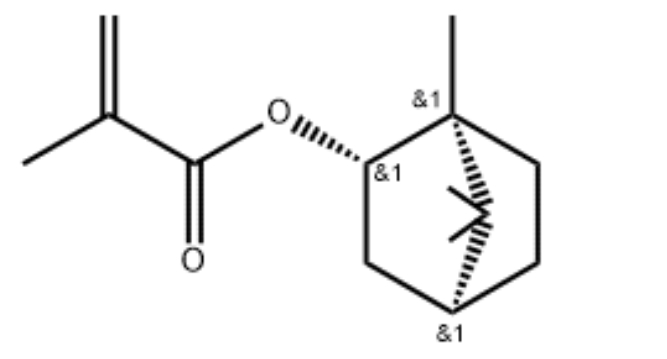
Isobornyl methacrylate (IBOMA) is an important functional monomer, commonly used in high-performance coatings, photocurable materials, adhesives and other industries, especially in UV curing systems and high weather resistance coatings.
7534-94-3
99%
IBOMA
1. High-end paints and coatings are used as active diluents in UV coatings, UV inks and UV adhesives, significantly reducing system viscosity and improving adhesion, wear resistance and weather resistance.
In light-curing systems, IBOMA can adjust the toughness, hardness and water resistance of the coating, and is suitable for scenes such as metal glazing and engineering plastic protective coatings. It is used for the outer protective coating of the car body to improve scratch resistance and glossiness. It is used for high-hardness, environmentally friendly surface coatings for furniture and floors, anti-reflective coatings for mobile phones, anti-fingerprint coatings for tablets, corrosion protection for metal structures such as bridges and ships, and for automotive coatings, high-solid coatings and optical fiber coatings. Its UV resistance makes it particularly suitable for outdoor applications. As a modified monomer, it can improve the heat resistance (high Tg), alcohol resistance and impact resistance of acrylic resins, and is suitable for decorative protective coatings of plastic films such as PET, PE, and PP.
2. Adhesives and sealants
In pressure-sensitive adhesives and sealants, IBOMA improves adhesion and flexibility by reducing shrinkage and internal stress. When used in optical disc protective coatings, it provides excellent scratch resistance and gloss. Optical adhesive (OCA): transparent adhesive layer for touch screens
3. Optical and electronic materials
Synthetic highly transparent polymers are suitable for optical lenses, optical fiber coatings and electronic device packaging materials.
Its low volatility and low odor properties are suitable for indoor packaging materials and precision instrument coatings.
Optical lens coating: anti-reflective coating for camera lenses, AR/VR lenses.
4. Photocurable materials
3D printing photosensitive resin: used for stereolithography (SLA/DLP) technology, manufacturing precision models or dental restorations, UV curing packaging inks
5. Cosmetic additives, used as film formers for nail polish or long-lasting makeup products
6. Used for modified plastics, copolymerized with polymethyl methacrylate (PMMA) to improve heat resistance (such as car lampshades)