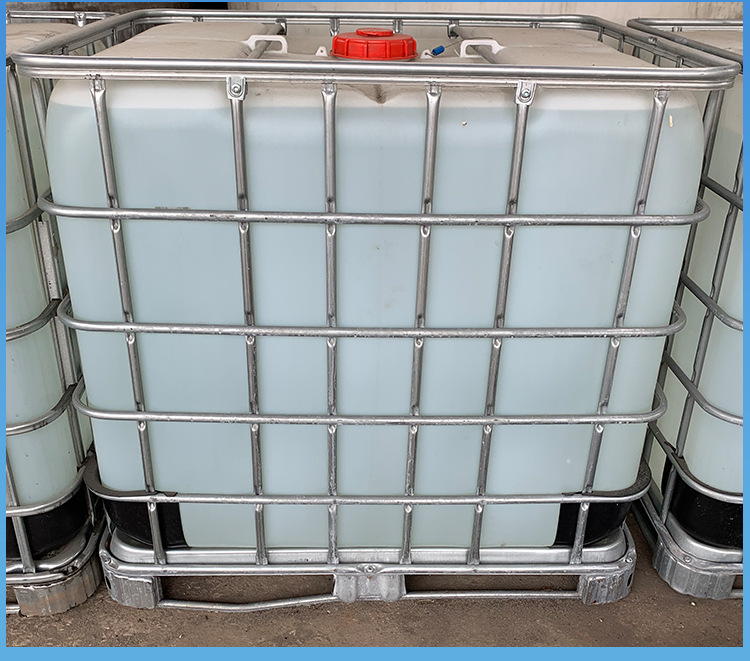
99.5% Morpholine

99.5% Morpholine

Contact Us

  • Category

    Environmentally friendly solvent series

  • Describe

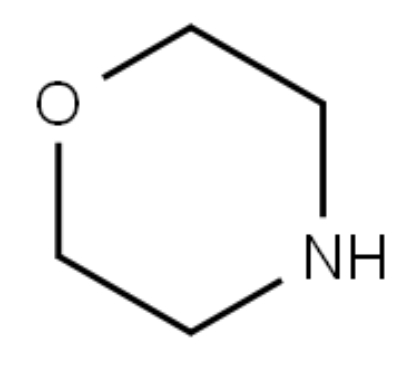
    Morpholine is a six-membered heterocyclic organic compound containing oxygen and nitrogen atoms. It has the dual structural characteristics of amine and ether and is widely used in rubber accelerators, preservatives, pharmaceutical intermediates, corrosion inhibitors, surfactants and agricultural chemicals.

  • Cas No.

    110-91-8

  • Purity

    99.5%

  • Synonym(s)

Physical and chemical properties

  • 1. Chemical Identity
    • Chemical Name: Morpholine
    • IUPAC Name: Morpholine
    • Synonyms: Tetrahydro-1,4-oxazine, Diethylene oximide
    • CAS Number: 110-91-8
    • EC Number: 203-815-1
    • Molecular Formula: C4​H9​NO
    • Molecular Weight: 87.12 g/mol
  • 2. Physical Properties
    • Appearance: Clear, colorless, oily, hygroscopic liquid.
    • Odor: Characteristic, amine-like (fishy) odor.
    • Melting Point: -5 °C (23 °F)
    • Boiling Point: 128-130 °C (262-266 °F) at 1013 hPa
    • Density: 1.002 g/cm³ at 20 °C
    • Solubility:
    • In Water: Miscible (soluble in all proportions).
    • In Organic Solvents: Miscible with acetone, ethanol, ether, and other common organic solvents.
    • Vapor Pressure: 8 hPa at 20 °C
    • Vapor Density: 3.0 (Air = 1)
    • Viscosity: 2.23 mPa·s at 20 °C
  • 3. Chemical Properties and Stability
    • Stability: Stable under normal conditions. Hygroscopic; absorbs water and carbon dioxide from the air.
    • Basicity (pKb): 5.6
    • Incompatibilities: Incompatible with strong oxidizing agents and strong acids. Can react with nitrites or nitrous agents to form carcinogenic nitrosamines. Corrosive to copper, zinc, and their alloys.
    • Hazardous Decomposition Products: Combustion may produce toxic fumes of carbon monoxide (CO), carbon dioxide (CO2​), and nitrogen oxides (NOx).
  • 4. Other Key Data
    • Flash Point: 31 °C (88 °F) - Closed cup
    • Autoignition Temperature: 310 °C (590 °F)
    • Explosive Limits:
    • Lower Explosive Limit (LEL): 1.8 % (V)
    • Upper Explosive Limit (UEL): 11.0 % (V)
    • Refractive Index (n20/D): ~1.455
 

Certificates Of Analysis

Application

1. Used in the manufacture of rubber vulcanization accelerators such as NOBS, DTOS and MDS, accelerating the vulcanization reaction in the manufacture of tires and seals, accounting for about 20%~25%.

2. Used in the manufacture of metal corrosion inhibitors and metal gas rust inhibitors. Morpholine has the advantages of low toxicity as a metal gas-liquid corrosion inhibitor, and has good development prospects. It is used as a corrosion inhibitor for boiler water treatment and steam condensation systems to adjust the pH value to prevent metal pipe corrosion. Industrial water treatment accounts for about 40%~50% of the global consumption of morpholine.

3. Used in medicine to manufacture a variety of important drugs such as morpholine hydrochloride, morpholine guanidine, viroline, ibuprofen, kebiben, naproxen, dichloroaniline, sodium phenylacetate, etc., and is a key intermediate for synthesizing antibiotics (such as rifampicin), anticancer drugs and antiviral drugs.

4. In the resin industry, it is used to produce acrylic acid morpholine and the modification of water-based polymers. Acrylic acid morpholine is obtained by the reaction of acrylate and morpholine. The product is a water-soluble monomer and is also water-soluble after polymerization, so it is used for the modification of water-based polymers.

5. Natural gas and oil refining desulfurization, as a desulfurizer, remove hydrogen sulfide (H₂S) and carbon dioxide (CO₂) from natural gas and oil.

6. Printing and dyeing to manufacture optical bleaching agents and textile printing and dyeing auxiliaries.

7. In agriculture, morpholine fatty acid salts can be used as fruit preservatives, coating agents (protective agents) for the skin of fruits or melons and vegetables, which can appropriately inhibit base respiration, prevent water volatilization and shrinkage of the skin.

8. As a catalyst or solvent for polyamide resin (nylon), participate in polycondensation reactions.

9. Add to plastics or coatings to delay material aging.

10. In pesticides, as an intermediate of insecticides or fungicides (such as morpholine fungicides) and ethylenediamine, pesticides account for about 15%~20%.

11. The derivative N-methylmorpholine-N-oxide (NMMO) is an environmentally friendly solvent for the Lyocell process.

Safety Information

  • This information is a summary based on the Globally Harmonized System of Classification and Labelling of Chemicals (GHS).
    • 1. GHS Classification
      • Flammable Liquids (Category 3)
      • Acute Toxicity, Oral (Category 4)
      • Acute Toxicity, Dermal (Category 4)
      • Acute Toxicity, Inhalation (Category 4)
      • Skin Corrosion (Category 1B)
      • Serious Eye Damage (Category 1)
    • 2. GHS Label Elements
      • Pictograms:
        • Flame (GHS02)
        • Corrosion (GHS05)
      • Exclamation Mark (GHS07)
        • Signal Word: Danger
      • Hazard Statements (H-Statements):
        • H226: Flammable liquid and vapor.
        • H302 + H312 + H332: Harmful if swallowed, in contact with skin or if inhaled.
        • H314: Causes severe skin burns and eye damage.
      • Precautionary Statements (P-Statements):
      • Prevention:
        • P210: Keep away from heat, hot surfaces, sparks, open flames and other ignition sources. No smoking.
        • P260: Do not breathe dust/fume/gas/mist/vapors/spray.
        • P280: Wear protective gloves, protective clothing, eye protection, and face protection.
      • Response:
        • P301 + P330 + P331: IF SWALLOWED: Rinse mouth. Do NOT induce vomiting.
        • P303 + P361 + P353: IF ON SKIN (or hair): Take off immediately all contaminated clothing. Rinse skin with water or shower.
        • P305 + P351 + P338: IF IN EYES: Rinse cautiously with water for several minutes. Remove contact lenses, if present and easy to do. Continue rinsing.
        • P310: Immediately call a POISON CENTER or doctor/physician.
      • Storage:
        • P403 + P235: Store in a well-ventilated place. Keep cool.
        • P405: Store locked up.
      • Disposal:
        • P501: Dispose of contents/container to an approved hazardous waste disposal plant.
    • 3. Summary of Primary Hazards
      • Health Hazards: Corrosive. Causes severe burns to skin and irreversible damage to eyes. Harmful by all routes of exposure (ingestion, skin contact, and inhalation). Vapors are irritating to the respiratory tract and can cause coughing, burning sensation, and difficulty breathing.
      • Fire Hazards: Flammable liquid and vapor. Vapors are heavier than air and can form explosive mixtures with air. Vapors may travel to a source of ignition and flash back.
      • Environmental Hazards: While not classified as acutely hazardous to the aquatic environment, it should be prevented from entering drains and waterways.

Follow Us
Get Updates

Contact Us