Polyol Series

Ethylene glycol MEG (cas 107-21-1), diethylene glycol DEG (cas 111-46-6), triethylene glycol TEG (cas 112-27-6), tetraethylene glycol (cas31692-85-0), propylene glycol PG (cas 57-55-6), dipropylene glycol DPG (cas 110-98-5), tripropylene glycol TPG (cas24800-44-0), 1,4-butanediol BDO (cas 110-63-4) are all polyols.they are widely used in automotive antifreeze, polyester fiber, plasticizer, pesticide intermediates, natural gas dehydration, oil field dehydration, unsaturated resin, polyester resin, biodegradable materials, etc.

Our advantages in Polyol Series.

Wencheng Chemical has the following three advantages in the field of polyols:


● 1. We are the first-level agent of triethylene glycol for major refineries and can stably supply products with stable quality and competitive prices.
● 2. We can synthesize high-purity triethylene glycol and tetraethylene glycol in large quantities using propylene oxide.
● 3. According to customer needs, we can produce ethylene glycol, diethylene glycol, triethylene glycol, propylene glycol, dipropylene glycol, tripropylene glycol, 1,4-butanediol and other products with high cost performance. The performance of these customized products can not only meet the normal use of customers, but also meet the needs of customers to reduce costs.

Our products

Here you will find a brief introduction to the core products of our Polyol Series
99.5% Ethylene glycol
EG

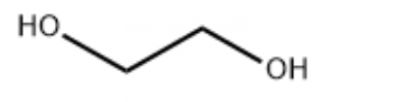
Ethylene glycol, referred to as MEG, cas 107-21-1, is a colorless, odorless, viscous liquid with a high boiling point (197.3°C) and a low freezing point (-12.9°C). It is easily soluble in water and has strong hygroscopicity. It has active chemical properties and can participate in esterification, polycondensation and other reactions. Its upstream raw materials are ethylene/ethylene oxide, and its downstream extends to the textile, packaging, automotive and refrigeration fields. It has the dual attributes of industrial basic raw materials and functional chemicals.

Wencheng Chemical's triethylene glycol synthesis process uses ethylene as raw material, generates ethylene oxide (EO) through oxidation, and hydrolyzes it under high temperature and high pressure (temperature 80-200°C, pressure 1-2 MPa) and water under alkaline conditions to generate ethylene glycol.

Ethylene glycol is mainly used in the production of polyester fibers (such as PET plastic bottles, polyester), unsaturated resins, and automotive antifreeze.

Storage conditions: cool and ventilated, avoid light, keep away from fire and heat sources

Purity (V/V%) ≥99.8%
Color No. ≤20APHA
Moisture ≤ 0.1%
Capacity: 2000 tons/month
Delivery speed: Same day

99.5% Diethylene glycol
DEG

Diethylene glycol, referred to as DEG, CAS No. 111-46-6, is a colorless, viscous, odorless liquid with a boiling point of about 245°C. It is easily soluble in water and most organic solvents, and has hygroscopicity and a high boiling point. It has stable chemical properties and is produced by the hydrolysis of ethylene oxide. It is often used as a by-product of ethylene glycol production. It is mainly used as an industrial solvent, polyester resin raw material, natural gas dehydrating agent and lubricant. It is also used in cosmetic moisturizing, but it must be strictly avoided from contact with food and medicine due to its toxicity. Its characteristics balance hydrophilicity and lipophilicity, and play a bridging role in many fields.

Wencheng Chemical's diethylene glycol synthesis process is to react MEG with ethylene oxide at a temperature of 150-200°C, a pressure of 1-2 MPa, and alkaline conditions (a small amount of NaOH) to produce diethylene glycol (DEG), which can be further reacted to produce triethylene glycol (TEG), tetraethylene glycol (TTEGE), etc. The molar ratio of water to ethylene oxide is usually above 10:1; reducing the water ratio can increase the DEG yield (but more TEG will be produced).

Diethylene glycol can be mainly used as a solvent for various purposes, a natural gas dehydration desiccant, an aromatic hydrocarbon separation and extraction agent, a textile lubricant, a softener, a finishing agent, as well as a solvent for nitrocellulose, resins, greases and chemicalbook printing inks. It is also used as an antifreeze component in brake fluids and compressor lubricants. It can also be used to prepare cleaning agents and as a dispersant solvent in other daily chemicals such as inks.

Storage conditions: cool and ventilated, avoid light, keep away from fire and heat sources

Purity (V/V%) ≥99.7%
Color No. ≤20APHA
Moisture ≤ 0.1%
Capacity: 1000 tons/month
Delivery speed: Same day
Minimum packaging: 225kg/iron drum or tank

99.5% Triethylene glycol
TEG

Triethylene glycol, referred to as TEG, CAS No. 112-27-6, is a colorless, viscous, high-boiling point (285°C) hygroscopic liquid with stable chemical properties and soluble in water and most organic solvents. As a downstream derivative of ethylene oxide, it is characterized by low volatility and strong hygroscopicity.

Wencheng Chemical's triethylene glycol synthesis process is to add ethylene glycol and catalyst (such as 1-5% NaOH) to the reaction kettle, preheat it to 60-100°C, and pressurize it (0.1-0.5 MPa), slowly pour in ethylene oxide, control the temperature to prevent bumping, maintain the temperature for 1-2 hours after the reaction is completed, ensure the reaction is complete, neutralize with acetic acid to pH neutral, filter to remove salts, and finally use the characteristics of the boiling point difference (the boiling point of triethylene glycol is 285°C, ethylene glycol is 197°C, and diethylene glycol is 245°C) to perform fractional distillation and purification under high vacuum under reduced pressure, remove water and other impurities, and obtain high-purity triethylene glycol.

Triethylene glycol is mainly used as an excellent dehydrating agent for natural gas, oilfield associated gas and carbon dioxide, brake fluid, polyester resin, triethylene glycol ester, etc.

Storage conditions: cool and ventilated, avoid light, keep away from fire and heat sources

Purity (V/V%) ≥99.7%
Color No. ≤20APHA
Moisture ≤ 0.1%
Capacity: 600 tons/month
Delivery speed: Same day
Minimum packaging: 225kg/iron drum or tank

99.5% Tetraethylene glycol
TEG-4 ; TEG₄

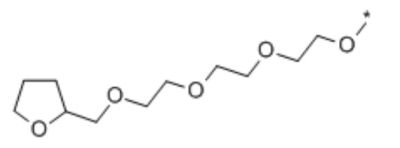
Tetraethylene glycol, referred to as TTEG, CAS number 31692-85-0, is a colorless, viscous liquid, an oligomer of ethylene glycol. The molecule contains four ether bonds and hydroxyl groups. It has a high boiling point (about 314°C), is miscible with water and polar solvents, and is hygroscopic and chemically stable. Its upstream raw material is ethylene oxide, and its downstream is widely used in solvents, natural gas dehydrating agents, polyester/polyurethane intermediates, plasticizers and lubricants. It is characterized by a high boiling point and multifunctional reactivity, and is suitable for high temperature or multi-hydroxyl reaction scenarios.

Wencheng Chemical's tetraethylene glycol synthesis process is that the starter triethylene glycol and the catalyst potassium hydroxide are mixed and preheated in the reaction kettle, ethylene oxide is slowly introduced, and the heat release is controlled through the cooling system to control the temperature of 120-150°C and the pressure of 0.2-0.5 MPa (to maintain the liquid state of ethylene oxide), keep it warm for a certain period of time after the reaction is completed to ensure complete conversion of ethylene oxide. After the reaction is completed, use acetic acid to neutralize the alkaline catalyst to generate filterable salts. Remove the salt through centrifuge filtration, vacuum dehydration to reduce the water, and use vacuum distillation (boiling point: tetraethylene glycol about 314°C) to separate oligomers (such as triethylene glycol) and high polymers (such as pentaethylene glycol) to obtain the middle part of high-purity tetraethylene glycol.

Tetraethylene glycol is mainly used in aromatic extraction solvents, cosmetic solvents, pesticide products, lubricating oils, etc.

Storage conditions: cool and ventilated, avoid light, keep away from fire and heat sources

Purity (V/V%) ≥99.8%
Color No. ≤20APHA
Moisture ≤ 0.1%
Capacity: 600 tons/month
Delivery speed: Same day
Minimum packaging: 225 kg/iron drum or tank

99.5% Propylene glycol
PG

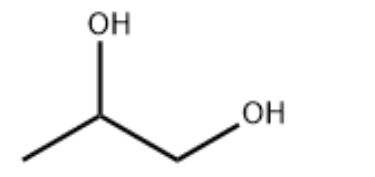
Propylene glycol is abbreviated as PG, CAS No. 57-55-6. It is a colorless, odorless, viscous liquid that is easily soluble in water and organic solvents. It has a boiling point of about 188°C, is hygroscopic, has low toxicity and good stability. Chemically, it is a diol and can be obtained by hydration of propylene oxide. Propylene glycol has two isomers, namely 1,2-propylene glycol and 1,3-propylene glycol.

Wencheng Chemical's propylene glycol synthesis process is to hydrolyze propylene oxide (PO) and water under acidic or alkaline conditions to produce propylene glycol in an alkaline environment at a controlled temperature of 80-120°C and a pressure of 0.3-1.0 MPa.

Propylene glycol is widely used in food (moisturizer), medicine (solvent), cosmetics (moisturizing ingredient) and industrial fields (antifreeze, resin raw materials). It has lubricating and antibacterial properties and is biodegradable. It is a cross-industry multifunctional basic chemical.

Storage conditions: cool and ventilated, avoid light, keep away from fire and heat sources

Purity (V/V%) ≥99.8%
Color No. ≤20APHA
Moisture ≤ 0.1%
Capacity: 1000 tons/month
Delivery speed: Same day
Minimum packaging: 200kg/iron drum or tank

99.5% Dipropylene glycol
DPG

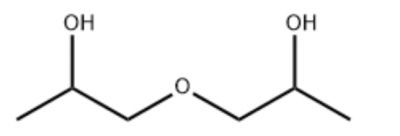
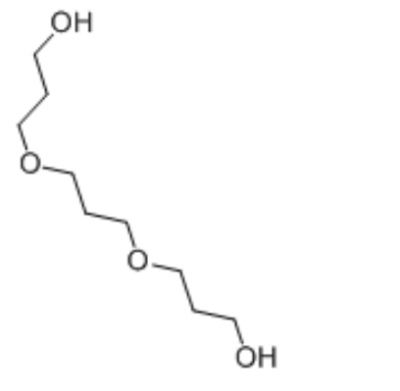
Dipropylene glycol, referred to as DPG, CAS No. 110-98-5, is a colorless, viscous, water-soluble organic compound that is stable and low-toxic at room temperature, and has hygroscopicity and mild solubility. It is produced by hydration of propylene oxide, and its downstream involves daily chemicals, food, chemicals and other fields. It is one of the derivatives of propylene glycol.

Wencheng Chemical's dipropylene glycol synthesis process is to use an acidic catalyst, p-toluenesulfonic acid, to control the temperature at 120~180°C (too high temperature will easily generate polymers), and under normal pressure, two molecules of propylene glycol (PG) undergo an intermolecular dehydration reaction for 2~6 hours to generate dipropylene glycol, while also generating a small amount of tripropylene glycol and other by-products.

Mainly used as moisturizer and solvent for cosmetics and medicines, flavor carrier for food industry, and raw material for polyester resin and lubricant.

Storage conditions: cool and ventilated, avoid light, keep away from fire and heat sources

Purity (V/V%) ≥99.8%
Color No. ≤20APHA
Moisture ≤ 0.1%
Capacity: 600 tons/month
Delivery speed: Same day
Minimum packaging: 200 kg/iron drum or tank

99.5% Tripropylene glycol
TPG

Tripropylene glycol, referred to as TPG, CAS No. 24800-44-0, is a colorless, transparent, medium-to-high viscosity organic compound that is liquid at room temperature, has excellent water solubility and mild hygroscopicity, and stable chemical properties. Its production usually uses propylene oxide as raw material, and its downstream can be extended to the manufacture of resins, adhesives and other materials.

Wencheng Chemical's tripropylene glycol synthesis process is to put propylene glycol into a reactor, add an acidic catalyst p-toluenesulfonic acid, and dehydrate propylene glycol to form an ether bond under high temperature (150-200°C) and reduced pressure to generate a mixture of dipropylene glycol and tripropylene glycol. Different fractions are separated by reduced pressure distillation to obtain tripropylene glycol.

Tripropylene glycol is often used as an intermediate or solvent in cosmetics (moisturizer), pharmaceuticals (carrier), coatings and polyurethane industry (plasticizer/reactive monomer) and other fields.

Storage conditions: cool and ventilated, avoid light, keep away from fire and heat sources

Purity (V/V%) ≥99.8%
Color No. ≤20APHA
Moisture ≤ 0.1%
Capacity: 600 tons/month
Delivery speed: Same day
Minimum packaging: 200 kg/iron drum or tank

99.5% 1,4-Butanediol
BDO

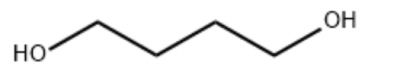
1,4-Butanediol is referred to as BDO, CAS No. 110-63-4. It is a colorless viscous liquid with a boiling point of about 230°C and a melting point of 20°C. It is easily soluble in water and organic solvents. Its molecule contains a dihydroxy structure, which can undergo esterification, polycondensation and other reactions. It is an important chemical intermediate. The upstream uses maleic anhydride or calcium carbide derived from coal/natural gas as raw materials, and the downstream is widely used in biodegradable plastics (PBAT), polyurethane elastomers, engineering plastics (PBT), lithium battery solvents (NMP) and pharmaceutical fields. As the core raw material of environmentally friendly materials, it has become a key carrier for promoting green chemical industry due to breakthroughs in bio-based BDO technology in recent years.

Wencheng Chemical's tripropylene glycol synthesis process is to esterify maleic anhydride with methanol to produce dimethyl maleate (DMM), control medium and low pressure (1-5 MPa) and temperature about 200℃, and hydrogenate DMM under copper-zinc catalyst to produce BDO, with tetrahydrofuran (THF) and γ-butyrolactone (GBL) as by-products.Biological methods are under development.

BDO is an important chemical raw material, mainly used in the production of polyurethane, elastomers, lithium-ion batteries, tetrahydrofuran, polybutylene terephthalate, etc.

Storage conditions: cool and ventilated, avoid light, keep away from fire and heat sources

Purity (V/V%) ≥99.6%
Color No. ≤20APHA
Moisture ≤ 0.1%
Capacity: 2000 tons/month
Delivery speed: Same day
Minimum packaging: 200 kg/iron drum or tank

FAQ

You may also want to know this

1.What are the characteristics and specific uses of triethylene glycol (TEG)?


Triethylene glycol (TEG) is a colorless, odorless, high-boiling-point liquid (CAS 112-27-6) with excellent hygroscopicity and thermal stability. It is mainly used in natural gas dehydration and oil field production and transportation, and can effectively remove moisture from the gas to ensure pipeline transportation safety; it can also be used as a raw material for pesticide intermediates and plasticizers. The purity of TEG produced by our company is stable at more than 99.5%, and the moisture content is strictly controlled below 0.1%, meeting the high-precision needs of industry.


2.What are the main advantages and application scenarios of tetraethylene glycol?


Tetraethylene glycol (CAS 31692-85-0) has a larger molecular weight, higher viscosity, and outstanding high temperature resistance. It is particularly suitable for polyester resin synthesis and environmentally friendly plasticizer production, which can improve the flexibility and durability of materials. In addition, it is also used in the deep processing process of natural gas dehydration. Our company uses refined distillation technology to ensure that the purity of tetraethylene glycol reaches more than 99.5%, the product batch consistency is high, and long-term cooperative customers have good feedback.


3.How does Wencheng Chemical guarantee product quality and supply chain stability?


"We ensure reliable service through the following measures:

1. Quality control: Raw materials are sourced from high-quality suppliers such as Sinopec, and the production process is fully automated. Each batch is tested by GC and accompanied by a quality inspection report;

2. Supply chain efficiency: We have our own storage capacity of 10,000 tons, support global delivery within 48 hours, and urgent orders can be processed expedited;

3. Technical support: Provide free technical consultation to help customers optimize product application solutions. In the 10 years since its establishment, the company has passed ISO 9001 certification and serves more than 10 countries and regions around the world."


4.Can Wencheng Chemical produce products that meet minimum performance requirements and are more price competitive?


Wencheng Chemical is able to provide customized chemicals. We can produce cost-effective products that meet customers' minimum usage requirements based on their performance and cost requirements.


5.What grades are available of triethylene glycol (CAS 112-27-6)?


Triethylene glycol is classified into 90%, 95%, 99%, 99.5% and other specifications according to purity.


Follow Us
Get Updates

Contact Us