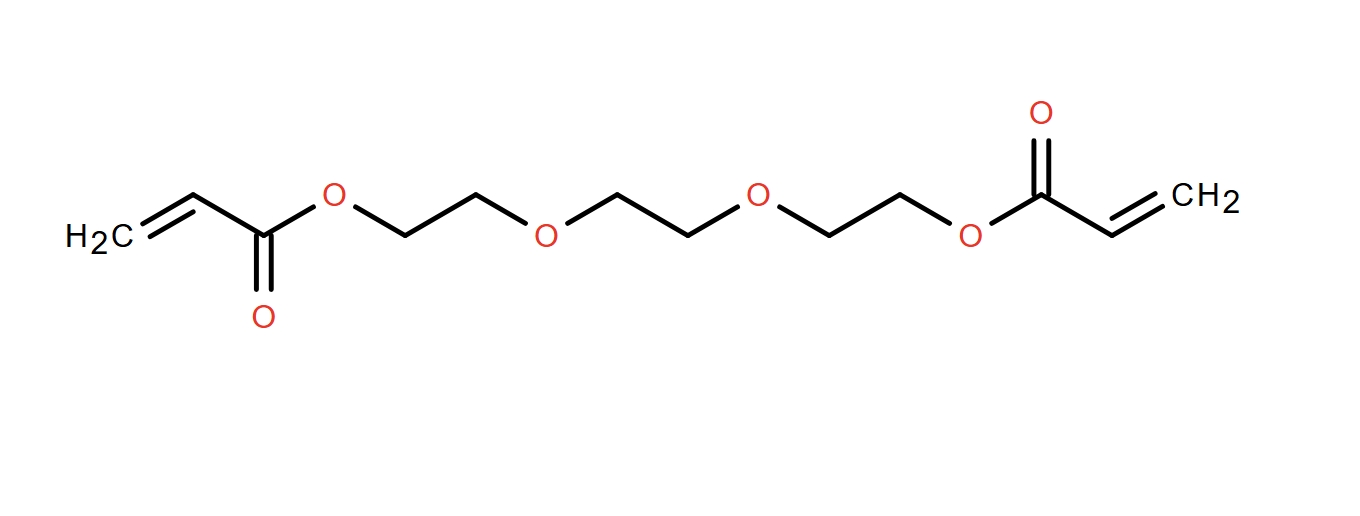
Tripropylene glycol diacrylate

Tripropylene glycol diacrylate

Contact Us

  • Category

    Acrylate series

  • Describe

    Tripropylene glycol diacrylate (TPGDA) is a common bifunctional acrylate reactive monomer. It has low viscosity, high flexibility and excellent cross-linking ability, and is widely used in UV/EB curing coatings, inks, adhesives, electronic packaging, 3D printing resins and other systems.

  • Cas No.

    42978-66-5

  • Purity

    mixture

  • Synonym(s)

    TPGDA

Physical and chemical properties

  • 1. Chemical Identity
    • Chemical Name: Tripropylene glycol diacrylate
    • IUPAC Name: A mixture including [2-(2-Acryloyloxy-1-methylethoxy)-1-methylethyl] acrylate
    • Synonyms: TPGDA
    • CAS Number: 42978-66-5
    • EC Number: 256-032-2
    • Molecular Formula: C15​H24​O6​
    • Molecular Weight: 300.35 g/mol
  • 2. Physical Properties
    • Appearance: Clear, colorless liquid.
    • Odor: Mild, characteristic, acrylic/ester-like.
    • Melting Point: <-20 °C (<-4 °F)
    • Boiling Point: >250 °C (>482 °F) at 1013 hPa
    • Density: 1.03 - 1.04 g/cm³ at 20 °C
    • Solubility:
    • In Water: 2 g/L at 20 °C (Slightly soluble)
    • In Organic Solvents: Soluble in many common organic solvents.
    • Vapor Pressure: <0.01 hPa at 20 °C
    • Viscosity: 10 - 20 mPa·s at 25 °C
  • 3. Chemical Properties and Stability
    • Stability: Stable under recommended storage conditions. Typically supplied with a polymerization inhibitor (e.g., MEHQ).
    • Incompatibilities: Incompatible with strong oxidizing agents, strong bases, strong acids, reducing agents, peroxides, and free-radical initiators.
    • Hazardous Polymerization: May occur if not properly inhibited or if exposed to high temperatures, direct sunlight, UV radiation, or contaminants. Polymerization is a highly exothermic reaction.
    • Hazardous Decomposition Products: Combustion may produce toxic fumes of carbon monoxide (CO) and carbon dioxide (CO2​).
  • 4. Other Key Data
    • Flash Point: >125 °C (>257 °F) - Closed cup
    • Refractive Index (n20/D): ~1.450
 

Application

1. Photocurable coatings and inks, such as low-viscosity active diluents, are used in UV-curable coatings for wood, plastics, and metals, giving the coatings high gloss, hardness, wear resistance, good chemical resistance, fast curing (medium-speed photopolymerization), and good adhesion. They are especially suitable for occasions that require low shrinkage and smooth surfaces (such as floor paint).

Used in printing inks (such as silk screen printing and flexographic printing), it provides excellent leveling and wear resistance, while reducing solvent volatilization to meet environmental protection needs. It is used in the production of solder mask inks for printed circuit boards, which can accurately control the curing speed and performance, ensure that areas on the circuit board that do not require welding are effectively protected, prevent problems such as bridging during welding, and improve the production quality and reliability of the circuit board.

It has low viscosity, good dilution and miscibility, and can be used as a polymerization monomer and active diluent to reduce the viscosity of the resin system and improve production efficiency. In high-end coatings, the addition of TPGDA makes the coating smoother and more delicate, and the color is more vivid and lasting.

2. UV adhesives and 3D printing For example, it is used for electronic component packaging, glass bonding, etc., using its dual functionality to form a moderate cross-linking network, balancing bonding strength and flexibility, and is used for PCB (printed circuit board) solder mask ink or display optical film, relying on its low shrinkage and high light transmittance (refractive index of about 1.45) to reduce curing deformation and optical defects.

3. 3D printing As the main component of photosensitive resin, it is matched with high-functionality monomers to adjust printing accuracy and mechanical properties.

4. Glass fiber reinforced plastic (FRP) is used as a modifier for unsaturated polyester resin to improve the curing rate and weather resistance, and elastomer modification enhances the mechanical properties of rubber or silicone (such as hardness and scratch resistance) through copolymerization.

5. Optical fiber coating: TPGDA helps to form a highly flexible and environmentally stress-resistant coating in the preparation of optical fiber coating, protects the optical fiber from mechanical damage and chemical erosion, and ensures the stable transmission of optical signals.

6. Optical devices The cured product has good transparency and hardness, which provides support for the manufacture of high-definition and scratch-resistant optical devices.

7. Electronic equipment casing coating helps to form a uniform, smooth and highly adherent protective coating, enhance the wear resistance and anti-aging properties of the electronic equipment casing, and ensure a long-lasting and beautiful appearance.

Safety Information

  • This information is a summary based on the Globally Harmonized System of Classification and Labelling of Chemicals (GHS).
    • 1. GHS Classification
      • Skin Irritation (Category 2)
      • Serious Eye Damage (Category 1)
      • Skin Sensitization (Category 1)
      • Hazardous to the Aquatic Environment, Chronic Hazard (Category 3)
    • 2. GHS Label Elements
      • Pictograms:
        • Corrosion (GHS05)
        • Exclamation Mark (GHS07)
      • Signal Word: Danger
      • Hazard Statements (H-Statements):
        • H315: Causes skin irritation.
        • H317: May cause an allergic skin reaction.
        • H318: Causes serious eye damage.
        • H412: Harmful to aquatic life with long lasting effects.
      • Precautionary Statements (P-Statements):
      • Prevention:
        • P261: Avoid breathing dust/fume/gas/mist/vapors/spray.
        • P272: Contaminated work clothing should not be allowed out of the workplace.
        • P280: Wear protective gloves, protective clothing, eye protection, and face protection.
      • Response:
        • P302 + P352: IF ON SKIN: Wash with plenty of soap and water.
        • P305 + P351 + P338 + P310: IF IN EYES: Rinse cautiously with water for several minutes. Remove contact lenses, if present and easy to do. Continue rinsing. Immediately call a POISON CENTER or doctor/physician.
        • P333 + P313: If skin irritation or rash occurs: Get medical advice/attention.
        • P362 + P364: Take off contaminated clothing and wash it before reuse.
      • Storage:
      • Store in a cool, dark, well-ventilated place away from incompatible materials.
      • Disposal:
        • P501: Dispose of contents/container to an approved hazardous waste disposal plant.
    • 3. Summary of Primary Hazards
      • Health Hazards: Causes serious, potentially irreversible, eye damage. Causes skin irritation and is a known skin sensitizer, meaning repeated contact can lead to the development of an allergic skin reaction (contact dermatitis).
      • Environmental Hazards: Harmful to aquatic life with long-lasting effects. Release into the environment should be avoided.
      • Reactivity Hazards: The product is a reactive monomer that can undergo hazardous polymerization if not properly stabilized and handled. Keep away from heat, sunlight, and contamination.

Follow Us
Get Updates

Contact Us