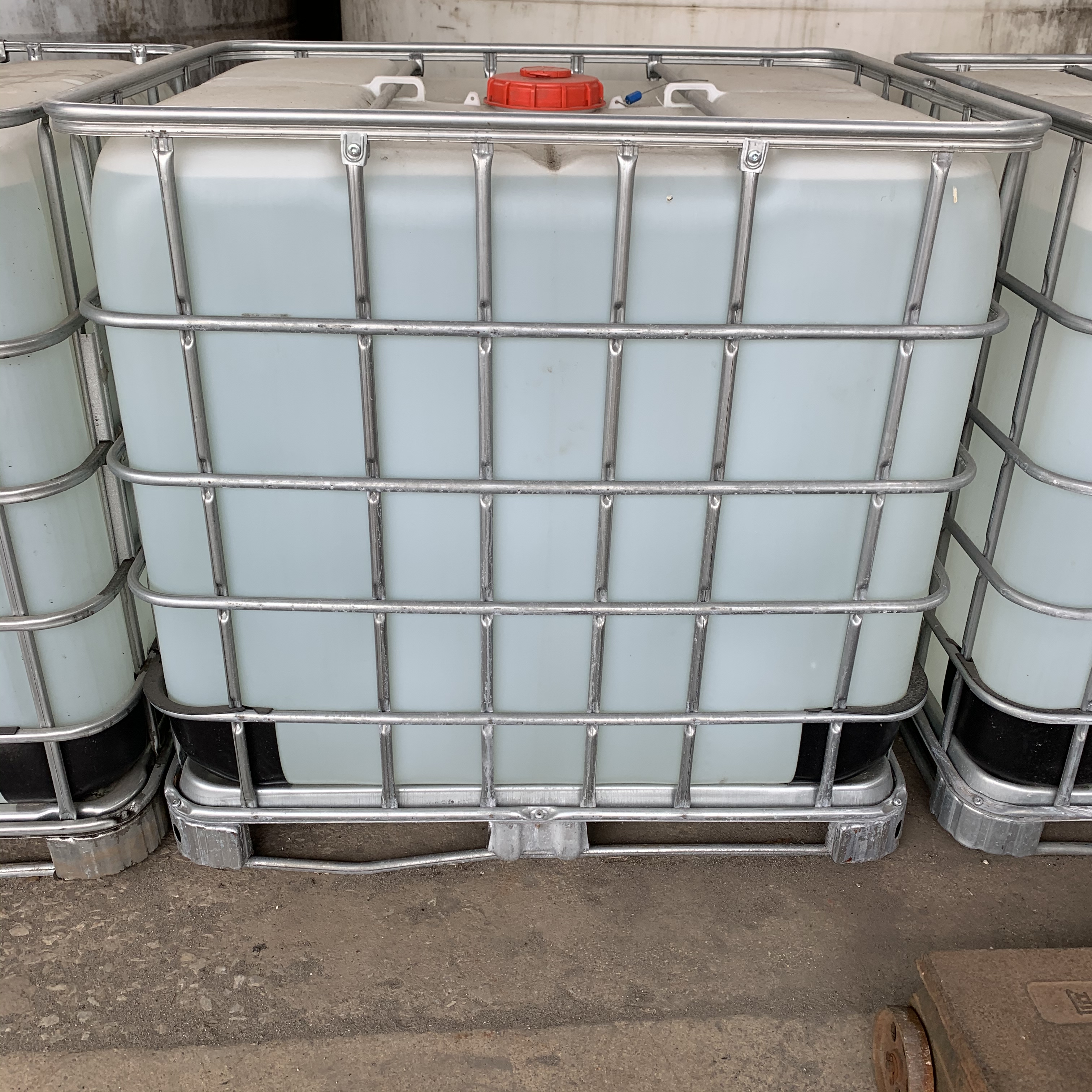
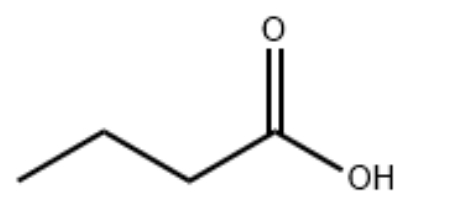
99.9% Butyric acid

99.9% Butyric acid

Contact Us

  • Category

    Organic acid ester series

  • Describe

    Butyric acid is a short-chain fatty acid with a strong pungent odor and a molecular formula of C4H8O2. It is a metabolite produced during natural fermentation and is found in animals, cheese, yogurt, and some fermented foods.

  • Cas No.

    107-92-6

  • Purity

    99.9%

  • Synonym(s)

Physical and chemical properties

  • 1. Chemical Identity
    • Chemical Name: Butyric acid
    • IUPAC Name: Butanoic acid
    • Synonyms: n-Butyric acid, Butanoic acid, 1-Butyric acid, Propylformic acid
    • CAS Number: 107-92-6
    • EC Number: 203-532-3
    • Molecular Formula: C4​H8​O2​
    • Molecular Weight: 88.11 g/mol
  • 2. Physical Properties
    • Appearance: Clear, colorless, oily liquid.
    • Odor: Very strong, pungent, unpleasant, rancid butter-like odor.
    • Melting Point: -8 to -5 °C (18 to 23 °F)
    • Boiling Point: 163-165 °C (325-329 °F) at 1013 hPa
    • Density: 0.959 g/cm³ at 20 °C
    • Solubility:
    • In Water: Miscible (soluble in all proportions).
    • In Organic Solvents: Miscible with ethanol, diethyl ether, and most common organic solvents.
    • Vapor Pressure: 0.9 hPa at 20 °C
    • Vapor Density: 3.04 (Air = 1)
  • 3. Chemical Properties and Stability
    • Stability: Stable under normal conditions. Hygroscopic.
    • Acidity (pKa): 4.82 at 25 °C
    • Incompatibilities: Incompatible with strong oxidizing agents, strong bases (causes exothermic reaction), and reducing agents. Corrosive to many metals.
    • Hazardous Decomposition Products: Combustion may produce toxic fumes of carbon monoxide (CO) and carbon dioxide (CO2​).
  • 4. Other Key Data
    • Flash Point: 72 °C (162 °F) - Closed cup
    • Autoignition Temperature: 440 °C (824 °F)
    • Explosive Limits:
    • Lower Explosive Limit (LEL): 2.0 % (V)
    • Upper Explosive Limit (UEL): 12.3 % (V)
    • Refractive Index (n20/D): ~1.398
 

Application

Food and flavor additives

1. Butyric acid is naturally present in dairy products such as butter and cheese. It has a unique fermented aroma and is often used as a food flavor to enhance the flavor of dairy products, candies, chewing gum, baked goods, margarine, beverages, and alcoholic beverages.

2. Used to produce butyrate esters with various fruit flavors, such as methyl butyrate with apple flavor, ethyl butyrate with pineapple flavor, isoamyl butyrate with snow pear flavor, isopropyl butyrate with pineapple flavor, and phenylethyl butyrate with rose flavor.

3. Used to produce food preservatives butyrates, such as calcium butyrate and sodium butyrate, which can inhibit the production of mold and bacteria, can be used as a natural preservative and extend the shelf life of food.

Medical field

1. Intestinal health: Butyric acid is a product of intestinal flora metabolism of dietary fiber, which can nourish colon cells and improve intestinal barrier function. Clinical studies have used it to treat inflammatory bowel disease (such as ulcerative colitis).

2. Antibacterial and anti-tumor, butyric acid has the effect of inhibiting pathogens (such as Salmonella), and has shown the potential to induce apoptosis of cancer cells in laboratory studies.

3. Pharmaceutical intermediates: used to prepare pharmaceutical intermediates such as γ-aminobutyric acid.

4. Flavoring agent: used as a flavoring agent in pharmaceutical manufacturing to improve the taste of drugs.

5. Salt-forming agent: the calcium salt of butyric acid is more soluble in cold water than in hot water, so it can be used as a salt-forming agent to increase the solubility of drugs.

Chemical Engineering and Materials Science

1. Cellulose butyrate: It has outstanding heat resistance, light resistance and moisture resistance. It is used to make coatings, films and degradable plastics, thermoformed signs, glasses, car steering wheels, black telephone parts, etc. It is stronger than cellulose acetate in anti-aging, water resistance, shrinkage, etc. Production of cellulose butyrate and various resins for compounding, paint preparation, spinning and cotton blending.

2. Used to make cellulose flame retardants.

3. Used in the production of chemical products such as butyramide, phenylethyl butyrate, isopentyl butyrate, 2-bromobutyric acid, decyl butyrate, 3-butanone-2-butyrate, 1-octene-3-butyrate, 2-ethyl-1,3-cyclopentanedione, etc.

4. Used in the production of butyrate esters, which are important solvents, fragrances or plasticizers.

Other uses

1. Animal feed additives: Butyrates (such as sodium butyrate) can improve the intestinal health of livestock and poultry, promote nutrient absorption, reduce diarrhea, and improve growth performance.

2. Used in the production of linalyl butyrate and geranyl butyrate in daily fragrances.

Safety Information

  • This information is a summary based on the Globally Harmonized System of Classification and Labelling of Chemicals (GHS).
    • 1. GHS Classification
      • Acute Toxicity, Oral (Category 4)
      • Skin Corrosion (Category 1B)
      • Serious Eye Damage (Category 1)
      • Specific Target Organ Toxicity — Single Exposure (Category 3), Respiratory System
    • 2. GHS Label Elements
      • Pictograms:
        • Corrosion (GHS05)
        • Exclamation Mark (GHS07)
        • Signal Word: Danger
      • Hazard Statements (H-Statements):
        • H302: Harmful if swallowed.
        • H314: Causes severe skin burns and eye damage.
        • H335: May cause respiratory irritation.
    • Precautionary Statements (P-Statements):
      • Prevention:
        • P260: Do not breathe dust/fume/gas/mist/vapors/spray.
        • P264: Wash skin thoroughly after handling.
        • P280: Wear protective gloves, protective clothing, eye protection, and face protection.
    • Response:
      • P301 + P330 + P331: IF SWALLOWED: Rinse mouth. Do NOT induce vomiting.
      • P303 + P361 + P353: IF ON SKIN (or hair): Take off immediately all contaminated clothing. Rinse skin with water or shower.
      • P304 + P340: IF INHALED: Remove person to fresh air and keep comfortable for breathing.
      • P305 + P351 + P338: IF IN EYES: Rinse cautiously with water for several minutes. Remove contact lenses, if present and easy to do. Continue rinsing.
      • P310: Immediately call a POISON CENTER or doctor/physician.
    • Storage:
      • P403 + P233: Store in a well-ventilated place. Keep container tightly closed.
      • P405: Store locked up.
    • Disposal:
      • P501: Dispose of contents/container to an approved hazardous waste disposal plant.
  • 3. Summary of Primary Hazards
    • Health Hazards: Corrosive. Causes severe burns to skin and eyes upon contact. Eye contact can lead to permanent damage, including blindness. Harmful if swallowed. Vapors are irritating to the respiratory system, and inhalation can cause coughing, shortness of breath, and burning sensation in the throat. The strong, unpleasant odor is a good warning property.
    • Fire Hazards: Combustible liquid. Vapors are heavier than air and may form explosive mixtures with air in the explosive range.
    • Environmental Hazards: While it is readily biodegradable, large spills can be harmful to aquatic life due to a lowering of pH.

Follow Us
Get Updates

Contact Us