99.5% Dipropylene glycol

99.5% Dipropylene glycol

Contact Us

  • Category

    Polyol Series

  • Describe

    Dipropylene glycol (DPG) is a colorless, low-odor, viscous diol compound with good solubility, low volatility and low toxicity. It is widely used in flavors and fragrances, cosmetics, industrial solvents, polyurethane synthesis and other fields.

  • Cas No.

    110-98-5

  • Purity

    99.5%

  • Synonym(s)

    DPG

Physical and chemical properties

  • 1. Chemical Identity
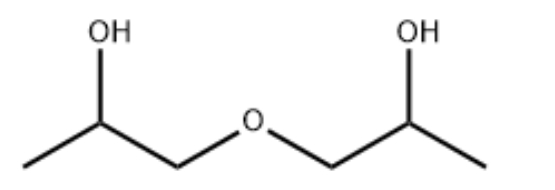
    • Chemical Name: Dipropylene glycol
    • IUPAC Name: A mixture including 2-(2-Hydroxypropoxy)propan-1-ol
    • Synonyms: DPG, Oxybispropanol
    • CAS Number: 25265-71-8 (for the isomer mixture)
    • EC Number: 246-770-3
    • Molecular Formula: C6​H14​O3​
    • Molecular Weight: 134.17 g/mol
  • 2. Physical Properties
    • Appearance: Clear, colorless, viscous, hygroscopic liquid.
    • Odor: Practically odorless.
    • Melting Point: <-20 °C (<-4 °F)
    • Boiling Point: 230-234 °C (446-453 °F) at 1013 hPa
    • Density: 1.020 - 1.025 g/cm³ at 20 °C
    • Solubility:
    • In Water: Miscible (soluble in all proportions).
    • In Organic Solvents: Miscible with many common organic solvents like ethanol, acetone, and toluene.
    • Vapor Pressure: <0.01 hPa at 20 °C
    • Vapor Density: 4.63 (Air = 1)
    • Viscosity: ~107 mPa·s at 20 °C
  • 3. Chemical Properties and Stability
    • Stability: Stable under normal conditions. Hygroscopic (absorbs moisture from the air).
    • Incompatibilities: Incompatible with strong oxidizing agents, strong acids, and isocyanates.
    • Hazardous Decomposition Products: Combustion may produce toxic fumes of carbon monoxide (CO) and carbon dioxide (CO2​).
  • 4. Other Key Data
    • Flash Point: 124 °C (255 °F) - Closed cup
    • Autoignition Temperature: 310 °C (590 °F)
    • Explosive Limits:
    • Lower Explosive Limit (LEL): 0.85 % (V)
    • Upper Explosive Limit (UEL): 9.0 % (V)
    • Refractive Index (n20/D): ~1.442
 

Application

1. Cosmetics and flavors and fragrances, dipropylene glycol has good co-solubility for water, oil and hydrocarbons, and has little odor, is non-toxic and has little irritation to the skin. It is an ideal solvent for flavors and cosmetics; used as a coupling agent and moisturizer for cosmetics; widely used in shampoo, hand sanitizer, face cream, shower gel, bath gel and skin care lotion, conditioner, skin care products lipstick, etc.; keep the fragrance of perfume lasting.

2. Resin industry, used to produce unsaturated resins, saturated resins, and the produced resins have good softness, crack resistance, weather resistance, and yellowing resistance. Pigments and resins can be dissolved in coatings to improve fluidity.

3. Pharmaceutical industry, as an ointment matrix and preservative carrier, maintain drug stability, help dissolve vitamins, penicillin and other drugs, and improve the bioavailability of local or injectable drugs.

4. Coatings and inks: used as solvents in resin, paint, and ink industries.

5. Used to manufacture polymer materials such as acrylates and methacrylates, used in the photocuring industry and the electronics industry.

6. Used for natural gas dehydration, tobacco moisturizing, etc.

7. Used as a solvent for cellulose acetate, cellulose nitrate, shellac varnish, and castor oil.

Safety Information

  • This information is a summary based on the Globally Harmonized System of Classification and Labelling of Chemicals (GHS).
    • 1. GHS Classification
      • This substance is not classified as hazardous according to the Globally Harmonized System (GHS).
    • 2. GHS Label Elements
      • Pictograms: No pictogram is required.
      • Signal Word: No signal word is required.
      • Hazard Statements: No hazard statements are required.
      • Precautionary Statements:
      • While not required, good industrial hygiene practices are recommended, such as:
        • P264: Wash hands thoroughly after handling.
        • P305 + P351 + P338: IF IN EYES: Rinse cautiously with water for several minutes. Remove contact lenses, if present and easy to do. Continue rinsing.
    • 3. Summary of Primary Hazards
      • Health Hazards: Dipropylene glycol has very low acute and chronic toxicity. It is not considered to be a skin or eye irritant under GHS classification criteria, and is not a skin sensitizer. It has a long history of safe use in cosmetics and fragrance applications. Ingestion of large quantities is required to produce toxic effects, which are significantly less severe than those of ethylene glycol or diethylene glycol.
      • Fire Hazards: Combustible liquid. It has a high flash point and is not considered a significant fire hazard under normal conditions, but it will burn if exposed to a strong ignition source and preheated.
      • Environmental Hazards: It is not classified as hazardous to the aquatic environment. It is readily biodegradable and has a low potential for bioaccumulation.

Follow Us
Get Updates

Contact Us