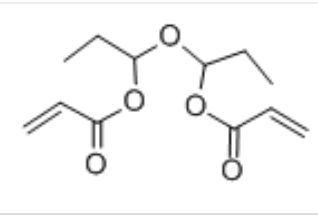
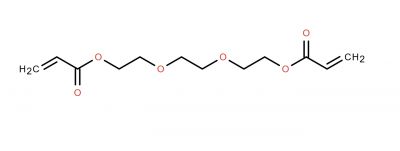
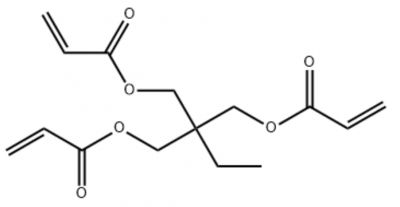
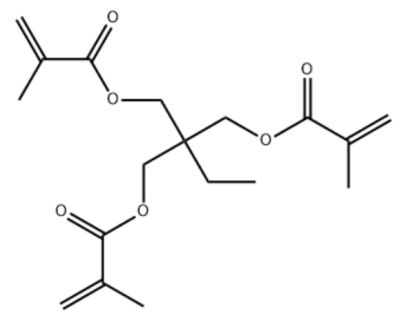
Acrylates are used as active diluents in UV light-curing coatings, automotive coatings, optical fiber coatings, inks and other fields.

Acrylates are used as active diluents in UV light-curing coatings, automotive coatings, optical fiber coatings, inks and other fields.
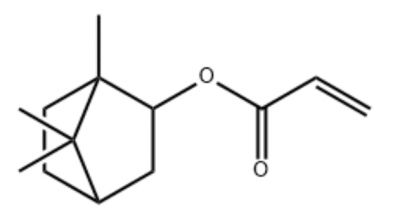
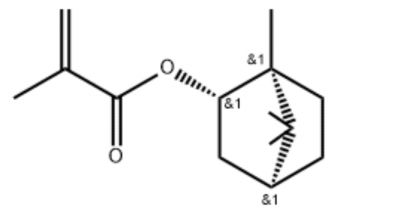
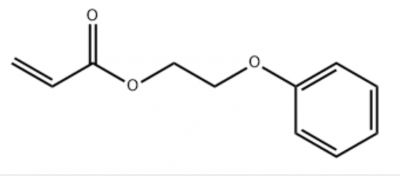
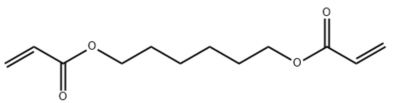
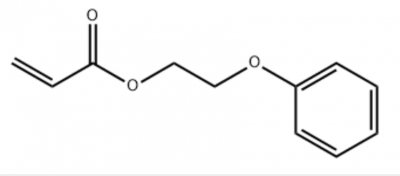
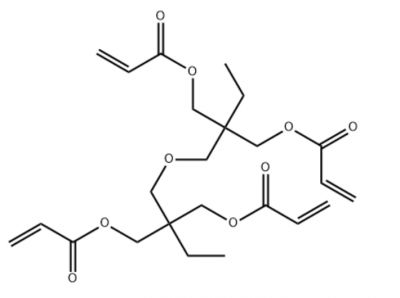
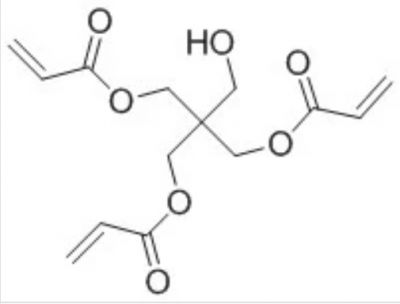
Wencheng Chemical has made in-depth improvements to its production equipment and production processes, including improving the reaction environment and using new catalysts. These enable us to produce products with excellent performance and to produce a variety of products according to customer needs.Our core products are: 1,6-hexanediol diacrylate HDDA (cas13048-33-4), 2-phenoxyethyl acrylate PHEA (cas48145-04-6), dipropylene glycol diacrylate DPGDA (cas 57472-68-1), tripropylene glycol diacrylate TPGDA (cas 42978-66-5), polyethylene glycol diacrylate PEGDA (cas 26570-48-9), pentaerythritol triacrylate PETA (cas 3524-68-3), ditrimethylolpropane triacrylate DPHA (cas 29570-58-9), trimethylolpropane triacrylate TMPTA (cas 15625-89-5), ditrimethylolpropane triacrylate DI-TMPTA (cas 94108-97-1), isobornyl acrylate IBOA (cas 5888-33-5), isobornyl methacrylate IBOMA (cas 7534-94-3), etc.
Compared with traditional equipment and processes, our products have the following two advantages:
● 1. Our products have better performance in boiling point, activity, volatility, viscosity, reaction time, brightness, oxidation resistance, compatibility, wear resistance, hardness, adhesion, shrinkage, impact resistance, etc.
● 2. We can customize other types of acrylic polymer materials for customers according to their needs.
1.How should photocurable materials for different application scenarios choose acrylic monomers to meet performance requirements?
Acrylic acid ester monomers have different physical properties, and different density, molecular weight, viscosity, odor, carbon chain mode, functionality, etc. create different chemical properties. For example, high functionality has strong reactivity, strong cross-linking density, and fast reaction speed, which is suitable for rapid production and reduced energy consumption. Cross-linking density increases brittleness and needs to be balanced with flexible monomers. Therefore, in actual production, the use of acrylic acid ester monomers in a compounded manner can achieve a variety of performance requirements.
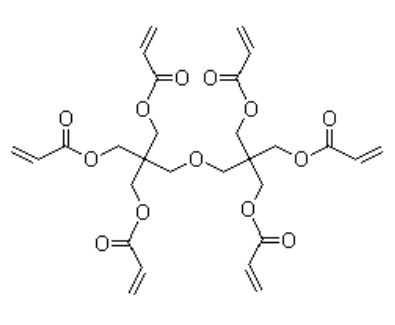
2. What are the advantages and disadvantages of using dipentaerythritol hexaacrylate (DPHA) in UV inks?
Advantages: 1. DPHA has a molecular weight of about 697, a functionality of up to 6, a high cross-linking density, a dense three-dimensional network structure formed during curing, a hardness of more than 4H after curing, and excellent chemical resistance. 2. Multifunctional groups provide more reaction sites, accelerate free radical polymerization, shorten UV curing time, and improve production efficiency High-precision printing ink.
3. The high cross-linking structure enhances the physical anchoring effect between the coating and the
substrate, and the adhesion to different substrates (such as plastics and metals) can be optimized by adjusting the formula.
4. As a high-functionality active diluent, DPHA reduces the viscosity of the system while avoiding sacrificing the cross-linking density, improving the printability and leveling of the ink.
5. The dense cross-linking network can resist chemical erosion such as solvents, acids and alkalis, and reduce scratches in daily use.
6. Replace traditional volatile solvents, reduce the viscosity of the system without volatilization, and meet environmental protection requirements (such as VOC restrictions). Disadvantages:
1. Excessive DPHA may cause brittle cracking of the coating,
2. The fast curing speed also has higher requirements for production capacity.
3. What measures can be taken to make the use of dipentaerythritol hexaacrylate better in UV ink applications and improve its performance?
1. Design from the perspective of multi-functional reaction mechanism: The six acrylate groups of DPHA work synergistically with the photoinitiator under UV light to quickly form a high-density cross-linked network, which is the core of improving hardness, wear resistance and curing speed. Therefore, it can be matched with high-efficiency photoinitiators (such as TPO, 1173) to ensure deep curing and avoid surface stickiness or uncured residues.
2. Formula optimization perspective: Long-chain monofunctional monomers have good flexibility, so the cross-linking density and coating performance can be controlled by adjusting the DPHA addition ratio (usually 10-30%), and at the same time, it can be compounded with low-functionality long-chain monomers (such as TPGDA) or oligomers (such as polyurethane acrylates) to balance rheological properties and mechanical properties (such as flexibility).
4. When designing performance formulas for food packaging or VOC-sensitive areas, how can we meet the requirements of low toxicity or environmental protection?
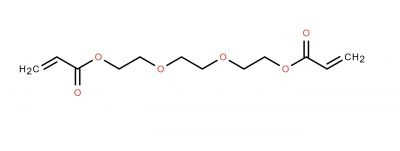
Generally, low-volatility, high-biocompatible monomers are selected, such as ethoxylated (4) bisphenol A diacrylate (EO-BPADA) and polyethylene glycol diacrylate (PEGDA), because of their high molecular weight, low volatility and low irritation. It should be noted that the curing conditions may need to be adjusted to compensate for the reaction activity, such as compounding with dipropylene glycol diacrylate with a functionality of 2.
5.Why is isobornyl acrylate (IBOA) popular among environmentally friendly coatings?
1. IBOA has a molecular weight of 208.3, a viscosity of only 5-10 mPa·s, low odor (light fragrance characteristic of esters), and a glass transition temperature (Tg) of 94°C, giving the coating high hardness and weather resistance.
2. Its high reactivity can reduce curing energy consumption, which is in line with environmental protection trends.
3. Isobornyl acrylate is a cyclic structure or a larger monomer. The large volume structure reduces volume shrinkage during curing and improves dimensional stability.
6. Which acrylate monomers are used in the actual production of optical fiber products and why?
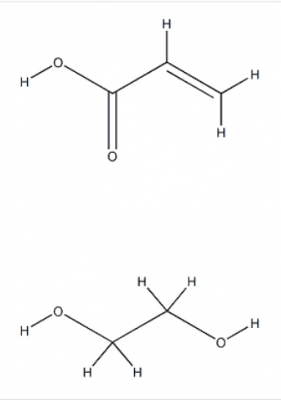
1. Ethylene glycol diacrylate (EGDA) High reactivity, bifunctional structure can increase crosslinking density, enhance hardness and heat resistance of coating. Commonly used for outer coating, providing fast curing and mechanical protection.
2. 1,6-Hexanediol diacrylate (HDDA) Excellent flexibility, strong adhesion, suitable for inner coating requiring elasticity, buffering mechanical stress, reducing microbending loss.
3. Trimethylolpropane triacrylate (TMPTA), trifunctional monomer, high crosslinking density, giving coating high hardness, wear resistance and chemical resistance, often used for outer layer enhancement protection.
Which acrylate monomers are used in photoresists and what are their functions?
1. Pentaerythritol triacrylate (PETA) is a trifunctional monomer that provides moderate crosslinking density, balances photosensitivity and mechanical properties, and is commonly used in ultraviolet (UV) photoresists
2. Pentaerythritol tetraacrylate is a tetrafunctional monomer with higher crosslinking density, which improves the chemical resistance and resolution of photoresists and is suitable for high-precision patterning
3. Dipentaerythritol hexaacrylate (DPHA) has high multifunctionality and significantly increases crosslinking density. It is used in applications that require high mechanical strength and etching resistance (such as semiconductor manufacturing)
4. Trimethylolpropane triacrylate (TMPTA) is a trifunctional monomer with high reactivity, improved photocuring speed, and is suitable for fast-processing photoresists.
5. Ethoxylated trimethylolpropane triacrylate (EO-TMPTA), reduces viscosity and improves toughness, balances cross-linking and flexibility requirements, and is suitable for photolithography of complex patterns
6. 1,6-Hexanediol diacrylate (HDDA) is a bifunctional monomer that enhances photosensitivity while maintaining a certain degree of flexibility, and is commonly used in negative photoresists.
7. Glycidyl methacrylate (GMA), introduces epoxy groups to improve adhesion and post-curing reactivity, and is suitable for special functionalized photoresists.
8. Isobornyl acrylate (IBOA), improves hydrophobicity and heat resistance, and is suitable for high-temperature processes or scenarios requiring low hygroscopicity
9. Ethoxylated bisphenol A diacrylate (EBAD) provides high reactivity and rigidity, and enhances the dimensional stability of photoresists."
7.What are the other acrylic monomers of Yixing Wencheng Chemical Co., Ltd.?
1,6-Hexanediol diacrylate, referred to as HDDA, cas13048-33-4; 2-Phenoxyethyl acrylate, referred to as PHEA, cas48145-04-6; Dipropylene glycol diacrylate, referred to as DPGDA cas 57472-68-1; Tripropylene glycol diacrylate, referred to as TPGDA cas 42978-66-5; Polyethylene glycol diacrylate, referred to as PEGDA cas 26570-48-9; Pentaerythritol triacrylate, referred to as PETA cas 3524-68-3; Ditrimethylolpropane triacrylate, referred to as DPHA cas 29570-58-9; Trimethylolpropane triacrylate, referred to as TMPTA cas 15625-89-5; Ditrimethylolpropane triacrylate, referred to as DI-TMPTA, cas 94108-97-1; Isobornyl acrylate Abbreviated as IBOA cas 5888-33-5; Isobornyl methacrylate abbreviated as IBOMA cas 7534-94-3, etc.
What are the other advantages of our company?
"Customization capability: molecular weight, functionality and viscosity can be adjusted according to customer needs;
Quality control system: ISO 9001 certified;
Technical support: providing full-process solutions from selection to process optimization."