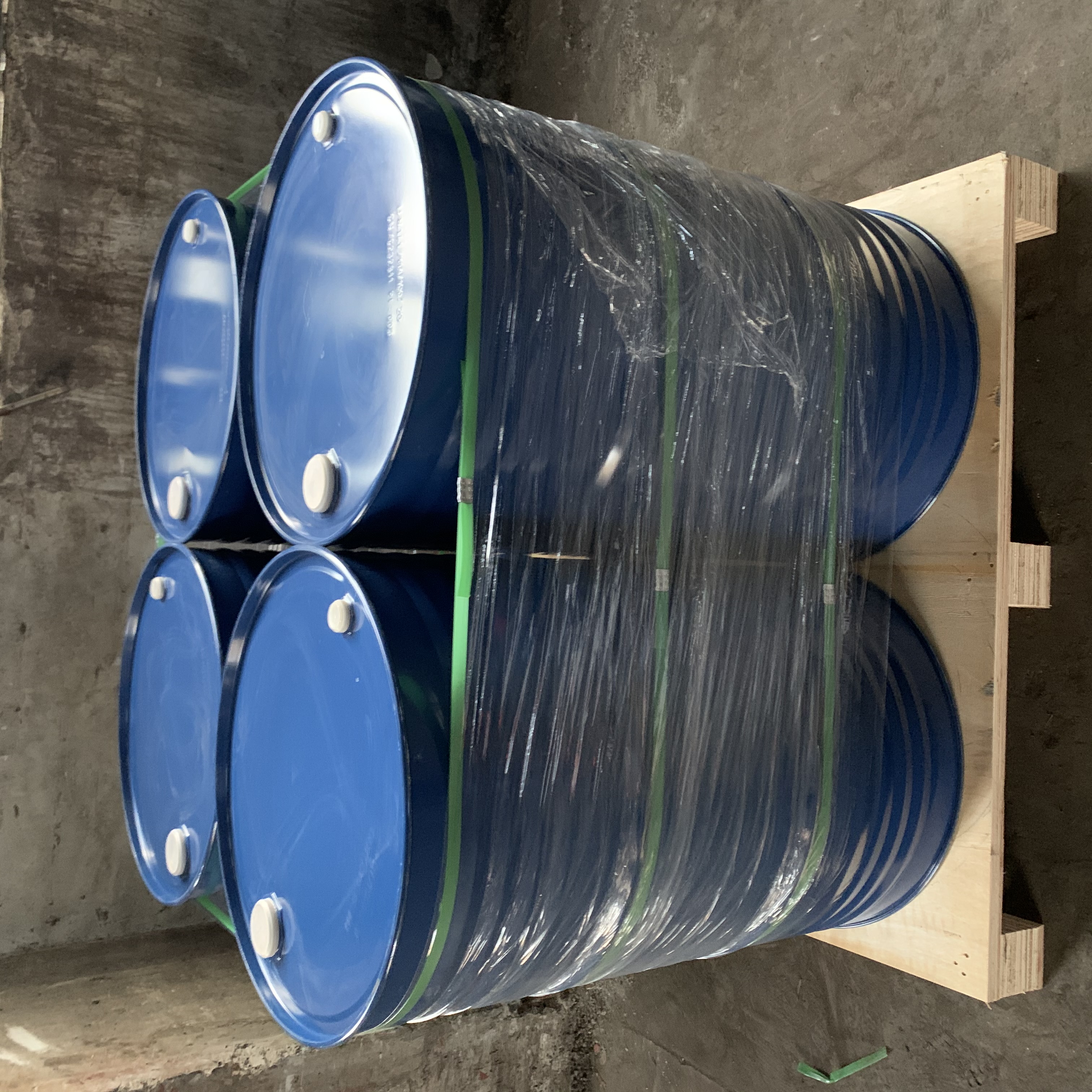
Triethylene glycol diacrylate

Triethylene glycol diacrylate

Contact Us

  • Category

    Acrylate series

  • Describe

    Triethylene glycol diacrylate (TEGDA) is a commonly used bifunctional acrylate monomer with moderate flexibility, low viscosity and good photocuring properties. It is widely used in formulation systems such as UV-curing coatings, inks, adhesives, and 3D printing materials.

  • Cas No.

    1680-21-3

  • Purity

    mixture

  • Synonym(s)

    TEGDA

Physical and chemical properties

  • 1. Chemical Identity
    • Chemical Name: Triethylene glycol diacrylate
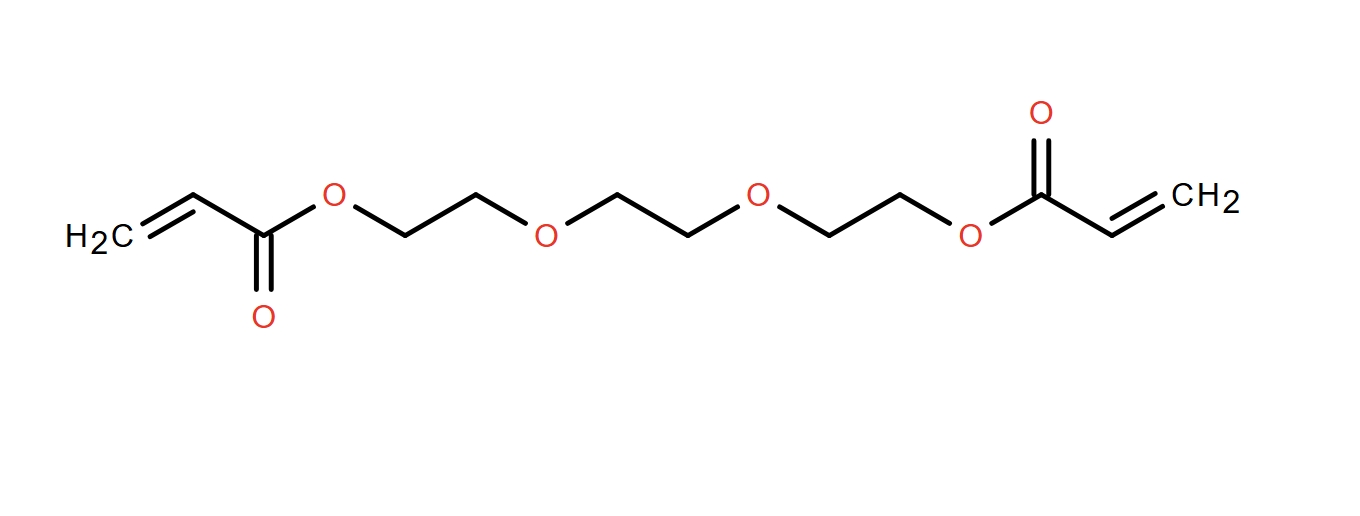
    • IUPAC Name: [2-(2-Acryloyloxyethoxy)ethoxy]ethyl acrylate
    • Synonyms: TEGDA, TIEGDA
    • CAS Number: 1680-21-3
    • EC Number: 216-853-9
    • Molecular Formula: C12​H18​O6​
    • Molecular Weight: 258.27 g/mol
  • 2. Physical Properties
    • Appearance: Clear, colorless liquid.
    • Odor: Mild, characteristic, ester-like.
    • Melting Point: Not available.
    • Boiling Point: >250 °C (>482 °F) at 1013 hPa
    • Density: 1.11 g/cm³ at 20 °C
    • Solubility:
    • In Water: 47.9 g/L at 20 °C (Soluble)
    • In Organic Solvents: Soluble in many common organic solvents.
    • Vapor Pressure: <0.01 hPa at 20 °C
    • Viscosity: 10 - 20 mPa·s at 25 °C
  • 3. Chemical Properties and Stability
    • Stability: Stable under recommended storage conditions. Typically supplied with a polymerization inhibitor (e.g., MEHQ) to prevent spontaneous polymerization.
    • Incompatibilities: Incompatible with strong oxidizing agents, strong bases, strong acids, reducing agents, peroxides, and free-radical initiators.
    • Hazardous Polymerization: May occur if not properly inhibited or if exposed to high temperatures, direct sunlight, UV radiation, or contaminants. Polymerization is a highly exothermic reaction.
    • Hazardous Decomposition Products: Combustion may produce toxic fumes of carbon monoxide (CO) and carbon dioxide (CO2​).
  • 4. Other Key Data
    • Flash Point: >145 °C (>293 °F) - Closed cup
    • Refractive Index (n20/D): ~1.460
 

Application

1. Coatings: Highly wear-resistant UV coatings for wood, metal or plastic surfaces, such as furniture coatings and protective layers for automotive parts.

2. Inks: UV-curable inks for the printing industry, such as packaging printing and label printing, to improve drying speed and scratch resistance.

3. Adhesives: Electronic component encapsulation adhesives, optical adhesives (such as mobile phone screen lamination adhesives), pressure-sensitive adhesives, structural adhesives, with fast curing and high bonding strength.

4. Dental materials
Composite resins: Dental resins and filling materials for tooth restorations, providing high hardness and wear resistance.
Adhesives: Dental orthodontic adhesives to ensure a firm bond between brackets and teeth.

5. 3D printing materials SLA printing resins, DLP printing resins, 3D printing photosensitive resins

6. Photocurable resins (SLA/DLP): Used to make high-precision models, medical device prototypes or jewelry castings, to enhance the mechanical strength and heat resistance of printed parts.

7. Photoresists: Graphical processes in microelectronics manufacturing, such as the processing of integrated circuits or flexible circuit boards.

8. Electronic packaging materials: LED encapsulation glue, protective coating for LED packaging or semiconductor devices, improving moisture resistance and insulation.

9. Medical polymer materials: surface treatment of biocompatible catheter coatings or degradable stents, which must undergo strict biosafety verification.

10. Optical materials: used to adjust the refractive index of lenses or optical fiber coatings.

11. Elastomer modification: as a cross-linking agent for rubber or plastics, improving chemical resistance or high temperature resistance.

Safety Information

  • This information is a summary based on the Globally Harmonized System of Classification and Labelling of Chemicals (GHS).
  • 1. GHS Classification
    • Skin Irritation (Category 2)
    • Serious Eye Damage (Category 1)
    • Skin Sensitization (Category 1)
    • Specific Target Organ Toxicity — Single Exposure (Category 3), Respiratory System
    • Hazardous to the Aquatic Environment, Chronic Hazard (Category 3)
  • 2. GHS Label Elements
    • Pictograms:
      • Corrosion (GHS05)
      • Exclamation Mark (GHS07)
    • Signal Word: Danger
    • Hazard Statements (H-Statements):
      • H315: Causes skin irritation.
      • H317: May cause an allergic skin reaction.
      • H318: Causes serious eye damage.
      • H335: May cause respiratory irritation.
      • H412: Harmful to aquatic life with long lasting effects.
    • Precautionary Statements (P-Statements):
    • Prevention:
      • P261: Avoid breathing dust/fume/gas/mist/vapors/spray.
      • P272: Contaminated work clothing should not be allowed out of the workplace.
      • P280: Wear protective gloves, protective clothing, eye protection, and face protection.
    • Response:
      • P302 + P352: IF ON SKIN: Wash with plenty of soap and water.
      • P305 + P351 + P338 + P310: IF IN EYES: Rinse cautiously with water for several minutes. Remove contact lenses, if present and easy to do. Continue rinsing. Immediately call a POISON CENTER or doctor/physician.
      • P333 + P313: If skin irritation or rash occurs: Get medical advice/attention.
      • P362 + P364: Take off contaminated clothing and wash it before reuse.
    • Storage:
      • P403 + P233: Store in a well-ventilated place. Keep container tightly closed.
    • Disposal:
      • P501: Dispose of contents/container to an approved hazardous waste disposal plant.
  • 3. Summary of Primary Hazards
    • Health Hazards: Causes serious, potentially irreversible, eye damage. Causes skin irritation and is a known skin sensitizer, meaning repeated contact can lead to the development of an allergic skin reaction (contact dermatitis). Vapors or mists may cause respiratory irritation.
    • Environmental Hazards: Harmful to aquatic life with long-lasting effects. Release into the environment should be avoided.
    • Reactivity Hazards: The product is a reactive monomer that can undergo hazardous polymerization if not properly stabilized and handled. Keep away from heat, sunlight, and contamination.

Follow Us
Get Updates

Contact Us