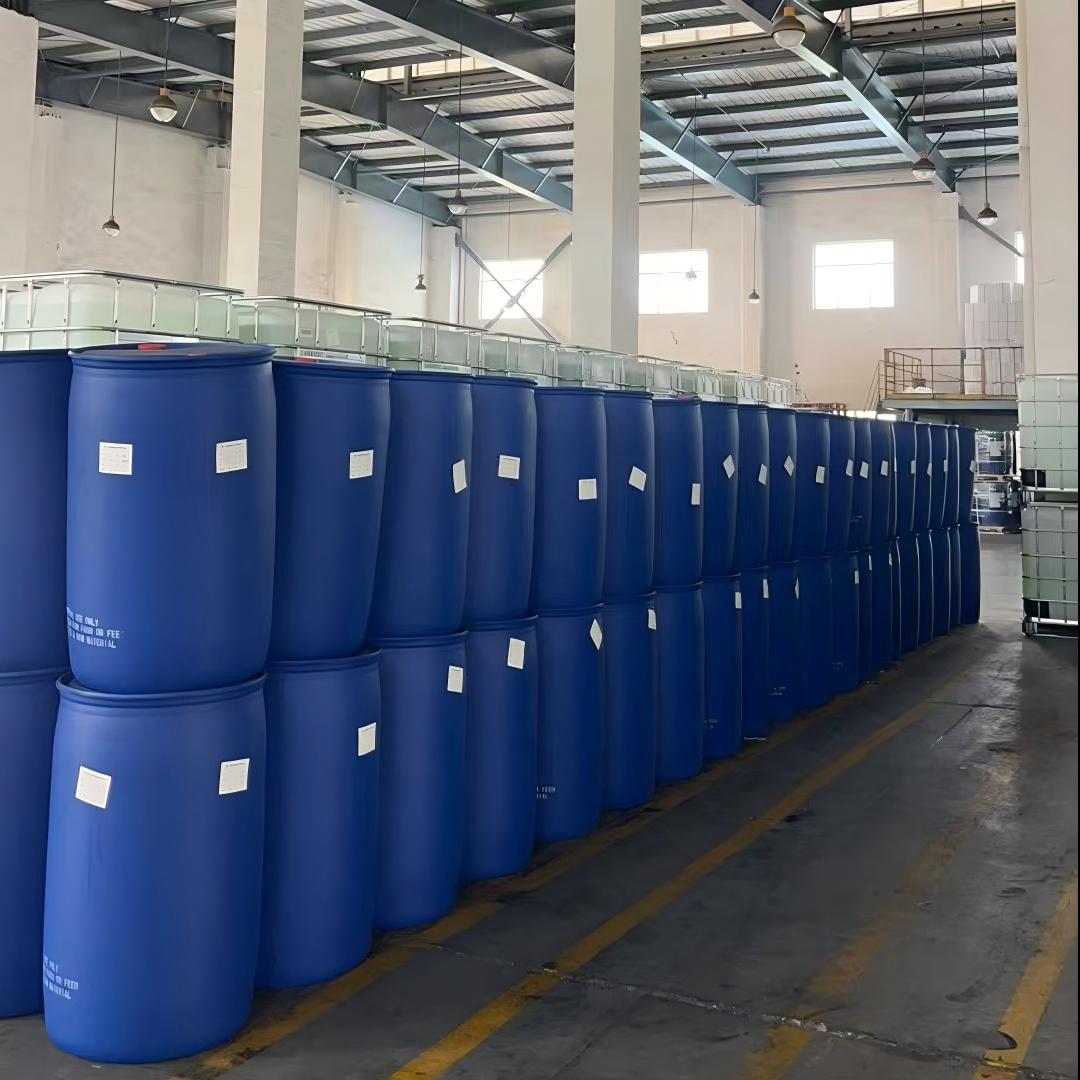
99.9% Acetonitrile Wencheng Chemical

99.9% Acetonitrile Wencheng Chemical

Contact Us

  • Category

    Polyol Series

  • Describe

    Acetonitrile (CH₃CN) is a colorless, transparent, highly polar, and volatile liquid. It is an excellent organic solvent and is mainly used in chromatography, extraction, pharmaceutical synthesis, and chemical refining.

  • Cas No.

    75-05-8

  • Purity

    99.9%

  • Synonym(s)

    ACN

Physical and chemical properties

  • 1.1. Chemical Identity
    • Chemical Name: Acetonitrile
    • IUPAC Name: Acetonitrile
    • Synonyms: Methyl cyanide; Cyanomethane; Ethyl nitrile; ACN.
    • CAS Number: 75-05-8
    • EC Number: 200-835-2
    • Molecular Formula: $CH_3CN$ (or $C_2H_3N$)
    • Molecular Weight: 41.05 g/mol
  • 1.2. Physical Properties
    • Appearance: Clear, colorless, volatile liquid.
    • Odor: Characteristic ethereal, sweetish odor (resembling ether).
    • Melting Point: -46 °C (-50.8 °F)
    • Boiling Point: 81.6 °C (178.9 °F) at 1013 hPa
    • Density: 0.786 g/cm³ at 20 °C
    • Solubility:
    • In Water: Miscible (completely soluble).
      • In Organic Solvents: Miscible with most organic solvents (e.g., ethanol, ether, acetone, chloroform).
    • Vapor Pressure: 97 hPa at 20 °C
    • Vapor Density: 1.42 (Air = 1)
    • Viscosity: 0.35 mPa·s at 20 °C
  • 1.3. Chemical Properties and Stability
    • Stability: Stable under recommended storage conditions.
    • Incompatibilities: Incompatible with strong oxidizing agents, strong acids, strong bases, and reducing agents. Reacts violently with sulfuric acid and chlorosulfonic acid.
    • Hazardous Polymerization: Will not occur.
    • Hazardous Decomposition Products: Thermal decomposition can produce highly toxic fumes of hydrogen cyanide ($HCN$), nitrogen oxides ($NO_x$), and carbon oxides ($CO, CO_2$).
  • 1.4. Other Key Data
    • Flash Point: 2 °C (35.6 °F) - Closed cup.
    • Autoignition Temperature: 524 °C (975 °F)
    • Explosive Limits: * Lower Explosive Limit (LEL): 3.0 % (V)
      • Upper Explosive Limit (UEL): 16.0 % (V)
    • Refractive Index: ~1.344
 

Application

1. Solvent use is the largest application of acetonitrile. It can be used as a solvent in the synthesis of vitamin A, cortisone, carbamate drugs and their intermediates, and also as an active medium solvent in the manufacture of vitamin B1 and amino acids.
2. It can replace chlorinated solvents in vinyl coatings, and is also used as an extractant for fatty acids, an alcohol denaturant, a butadiene extractant, and a solvent for acrylonitrile synthetic fibers.
3. In addition, it has many uses in textile dyeing, the lighting industry, fragrance manufacturing, and the manufacture of photosensitive materials.

Safety Information

  • This information is a summary based on the Globally Harmonized System of Classification and Labelling of Chemicals (GHS).
  • 2.1. GHS Classification
    • Flammable Liquids (Category 2)
    • Acute Toxicity, Oral (Category 4)
    • Acute Toxicity, Dermal (Category 4)
    • Acute Toxicity, Inhalation (Category 4)
    • Serious Eye Irritation (Category 2A)
  • 2.2. GHS Label Elements
    • Pictogram: Flame (GHS02), Exclamation Mark (GHS07)
    • Signal Word: Danger
    • Hazard Statements (H-Statements):
      • H225: Highly flammable liquid and vapor.
      • H302 + H312 + H332: Harmful if swallowed, in contact with skin, or if inhaled.
      • H319: Causes serious eye irritation.
  • Precautionary Statements (P-Statements):
    • Prevention:
      • P210: Keep away from heat, hot surfaces, sparks, open flames, and other ignition sources. No smoking.
      • P233: Keep container tightly closed.
      • P280: Wear protective gloves, protective clothing, eye protection, and face protection.
    • Response:
      • P303 + P361 + P353: IF ON SKIN (or hair): Take off immediately all contaminated clothing. Rinse skin with water.
      • P305 + P351 + P338: IF IN EYES: Rinse cautiously with water for several minutes. Remove contact lenses, if present and easy to do. Continue rinsing.
      • P312: Call a POISON CENTER or doctor if you feel unwell.
    • Storage:
      • P403 + P235: Store in a well-ventilated place. Keep cool.
    • Disposal:
      • P501: Dispose of contents/container to an approved hazardous waste disposal plant.
  • 2.3. Summary of Primary Hazards
    • Fire Hazards: Highly flammable. Vapors are heavier than air and may travel to a source of ignition and flash back.
    • Health Hazards: Harmful if swallowed, inhaled, or absorbed through the skin. It can cause serious eye irritation. Importantly, acetonitrile is metabolized to cyanide in the body; symptoms of cyanide poisoning (headache, dizziness, rapid pulse, nausea) may be delayed for several hours after exposure.
    • Environmental Hazards: While not classified as highly toxic to aquatic life, large-scale releases should be avoided to prevent pollution of water systems.

Follow Us
Get Updates

Contact Us