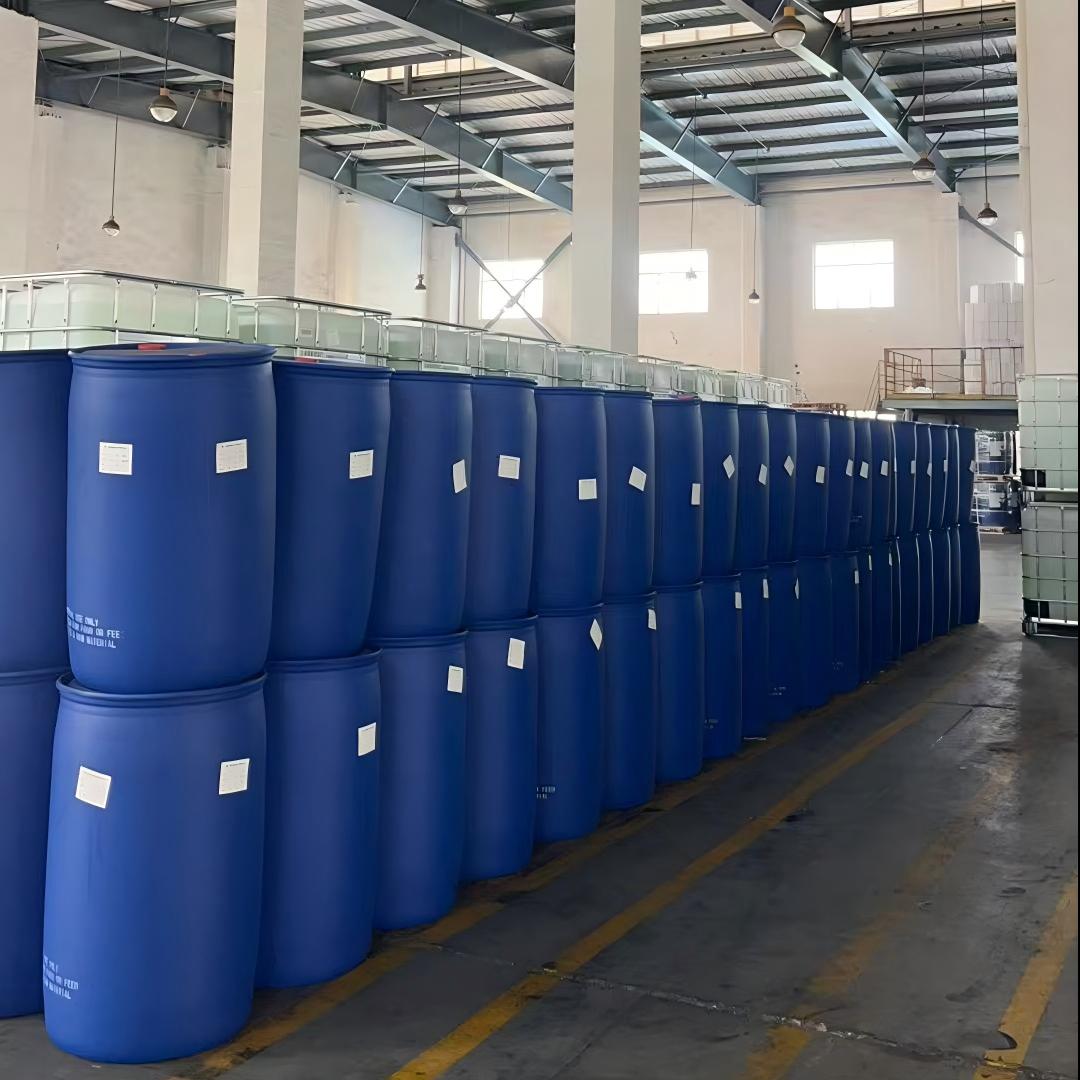
99.9% 2-Methyltetrahydrofuran

99.9% 2-Methyltetrahydrofuran

Contact Us

  • Category

    Polyol Series

  • Describe

    2-Methyltetrahydrofuran is a cyclic ether solvent that can replace tetrahydrofuran. It has good solubility, is easy to separate and recover, and is widely used in organic synthesis and pharmaceutical intermediates.

  • Cas No.

    96-47-9

  • Purity

    99.9%

  • Synonym(s)

    2-MeTHF

Physical and chemical properties

  • 1.1. Chemical Identity
    • Chemical Name: 2-Methyltetrahydrofuran
    • IUPAC Name: 2-methyloxolane
    • Synonyms: 2-MeTHF; Tetrahydro-2-methylfuran; Methyltetrahydrofuran.
    • CAS Number: 96-47-9
    • EC Number: 202-507-4
    • Molecular Formula: $C_5H_{10}O$
    • Molecular Weight: 86.13 g/mol
  • 1.2. Physical Properties
    • Appearance: Clear, colorless, volatile liquid.
    • Odor: Characteristic ethereal, pungent odor.
    • Melting Point: -136 °C (-212.8 °F)
    • Boiling Point: 80.2 °C (176.4 °F) at 1013 hPa
    • Density: 0.854 g/cm³ at 20 °C
    • Solubility:
      • In Water: ~140 g/L at 25 °C (limited solubility compared to THF, which facilitates easier water separation in industrial processes).
      • In Organic Solvents: Miscible with most organic solvents, including ethanol, diethyl ether, and acetone.
    • Vapor Pressure: 135 hPa at 20 °C
    • Vapor Density: 2.97 (Air = 1)
  • 1.3. Chemical Properties and Stability
    • Stability: Stable under recommended storage conditions. However, like other ethers, it is a peroxide former. It can form explosive peroxides upon prolonged exposure to air and light.
    • Incompatibilities: Incompatible with strong oxidizing agents, strong acids, and strong bases.
    • Hazardous Polymerization: Will not occur under normal conditions.
    • Hazardous Decomposition Products: Thermal decomposition produces carbon oxides ($CO, CO_2$).
  • 1.4. Other Key Data
    • Flash Point: -11 °C (12.2 °F) - Closed cup.
    • Autoignition Temperature: 270 °C (518 °F)
    • Explosive Limits: * Lower Explosive Limit (LEL): 1.2 % (V)
    • Upper Explosive Limit (UEL): 8.9 % (V)
    • Refractive Index: ~1.406
 

Application

1. Used as a solvent in resins, rubber, ethyl cellulose, etc.
2. Used as an intermediate in the pharmaceutical process of chloroquine phosphate.
3. Used as a biofuel additive to improve gasoline combustion performance.

Safety Information

  • This information is a summary based on the Globally Harmonized System of Classification and Labelling of Chemicals (GHS).
  • 2.1. GHS Classification
    • Flammable Liquids (Category 2)
    • Acute Toxicity, Oral (Category 4)
    • Skin Corrosion/Irritation (Category 2)
    • Serious Eye Damage/Irritation (Category 1)
  • 2.2. GHS Label Elements
    • Pictograms: Flame (GHS02), Corrosion (GHS05), Exclamation Mark (GHS07)
    • Signal Word: Danger
    • Hazard Statements (H-Statements):
      • H225: Highly flammable liquid and vapor.
      • H302: Harmful if swallowed.
      • H315: Causes skin irritation.
      • H318: Causes serious eye damage.
      • EUH019: May form explosive peroxides (Specific to certain jurisdictions).
    • Precautionary Statements (P-Statements):
      • Prevention:
        • P210: Keep away from heat, hot surfaces, sparks, open flames, and other ignition sources. No smoking.
        • P233: Keep container tightly closed.
        • P280: Wear protective gloves, eye protection, and face protection.
      • Response:
        • P303 + P361 + P353: IF ON SKIN (or hair): Take off immediately all contaminated clothing. Rinse skin with water.
        • P305 + P351 + P338 + P310: IF IN EYES: Rinse cautiously with water for several minutes. Remove contact lenses, if present and easy to do. Continue rinsing. Immediately call a POISON CENTER or doctor.
      • Storage:
        • P403 + P235: Store in a well-ventilated place. Keep cool.
      • Disposal:
        • P501: Dispose of contents/container to an approved hazardous waste disposal plant.
  • 2.3. Summary of Primary Hazards
    • Fire Hazards: Highly flammable. Vapors are heavier than air and can travel along the ground to a distant ignition source and flash back.
    • Health Hazards: Harmful if swallowed. It is significantly more irritating to the eyes than standard THF, potentially causing permanent damage. It also causes skin irritation upon contact.
    • Special Warning: 2-MeTHF should be stored under an inert atmosphere (like Nitrogen) and should contain a stabilizer (such as BHT) to prevent the formation of explosive peroxides. Always test for peroxides before distillation or evaporation.

Follow Us
Get Updates

Contact Us